
Last updated November 16, 2026
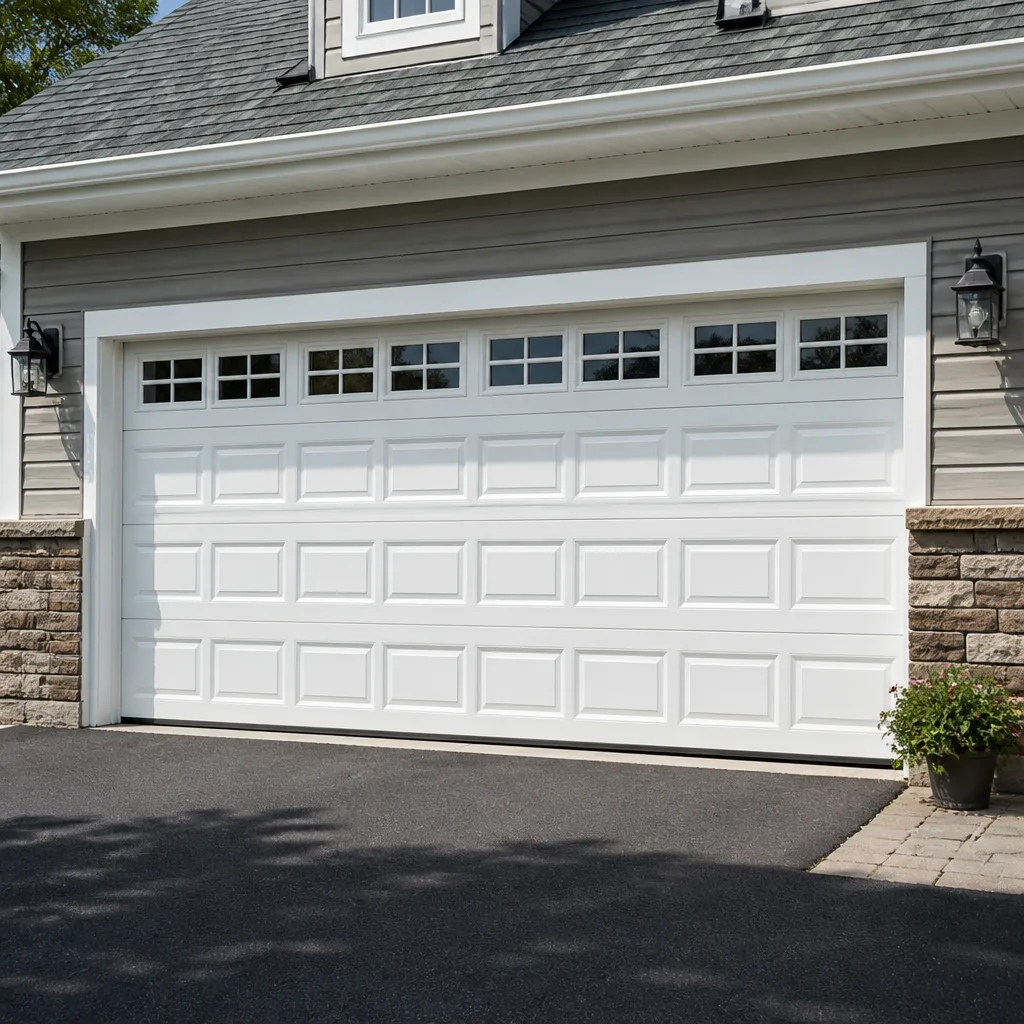 Raised-panel steel
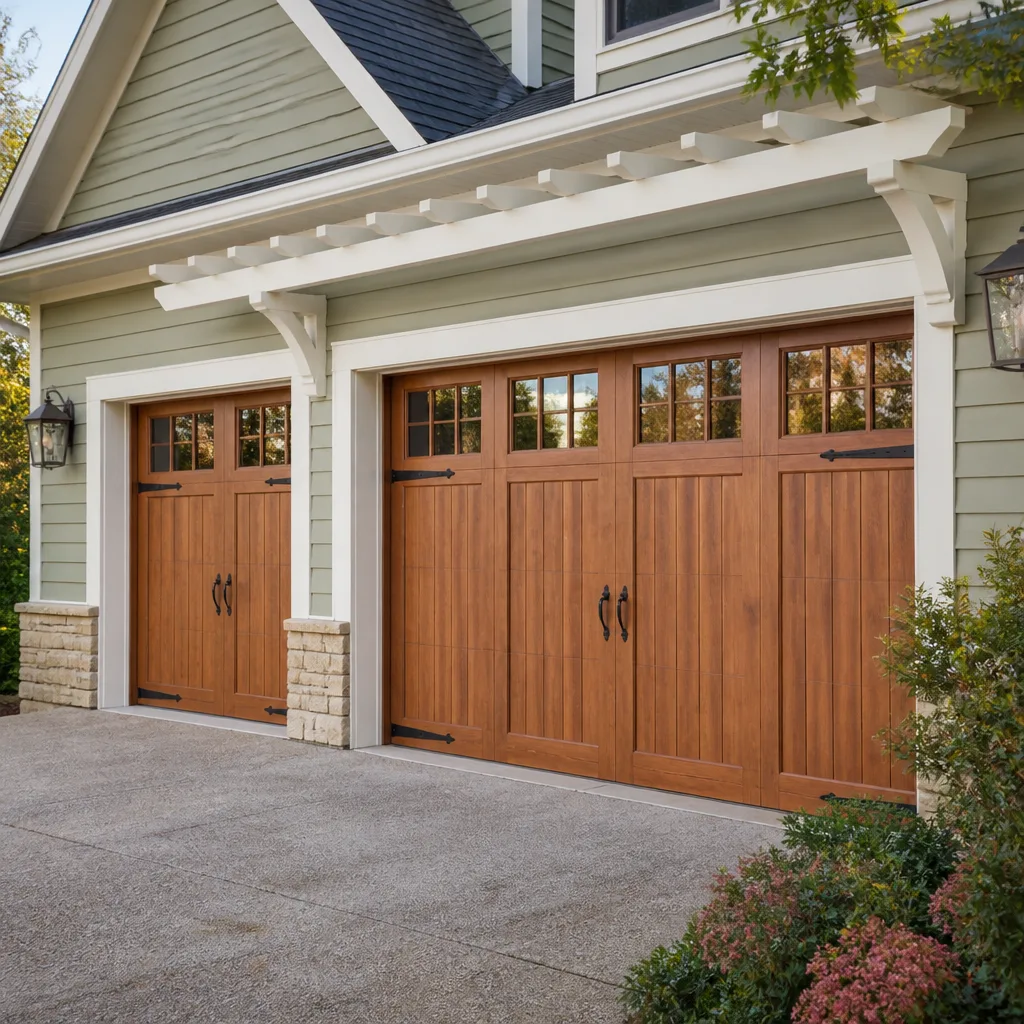 Carriage house
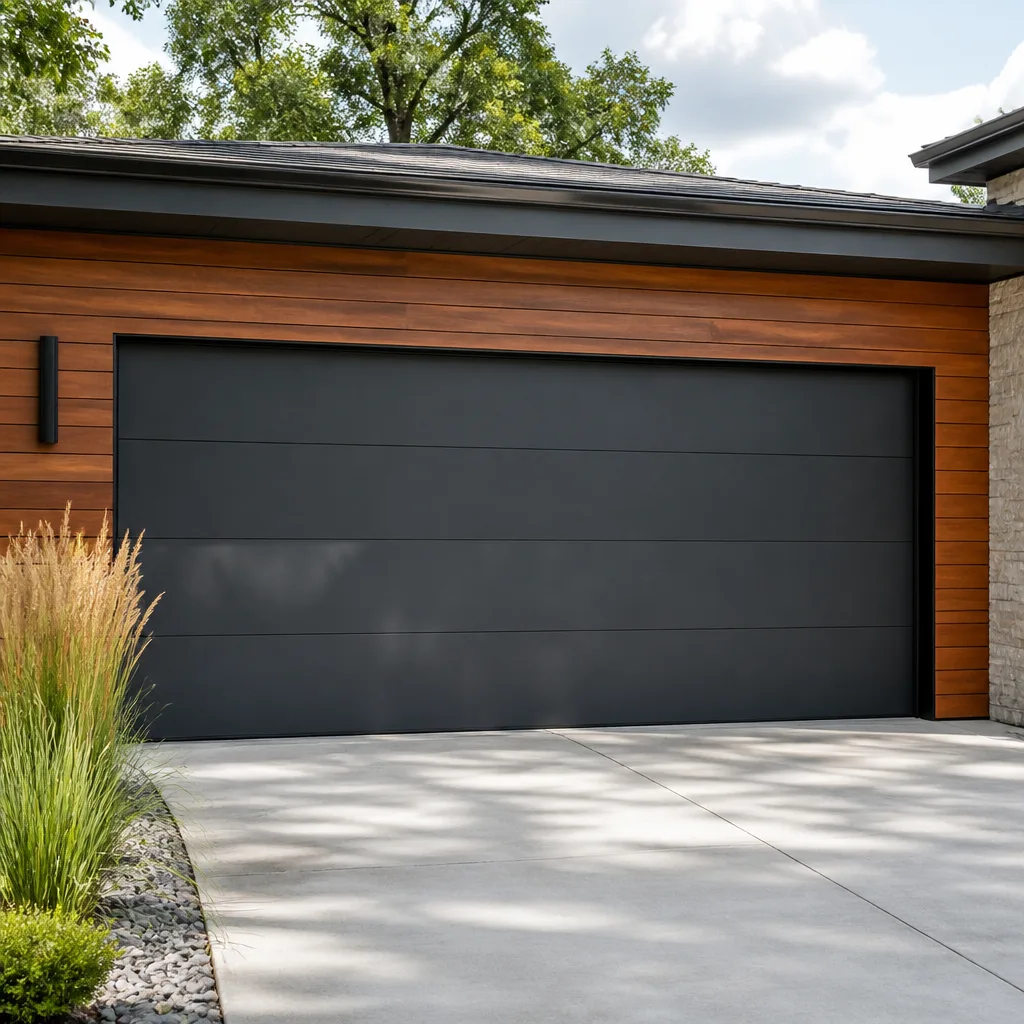 Modern flush
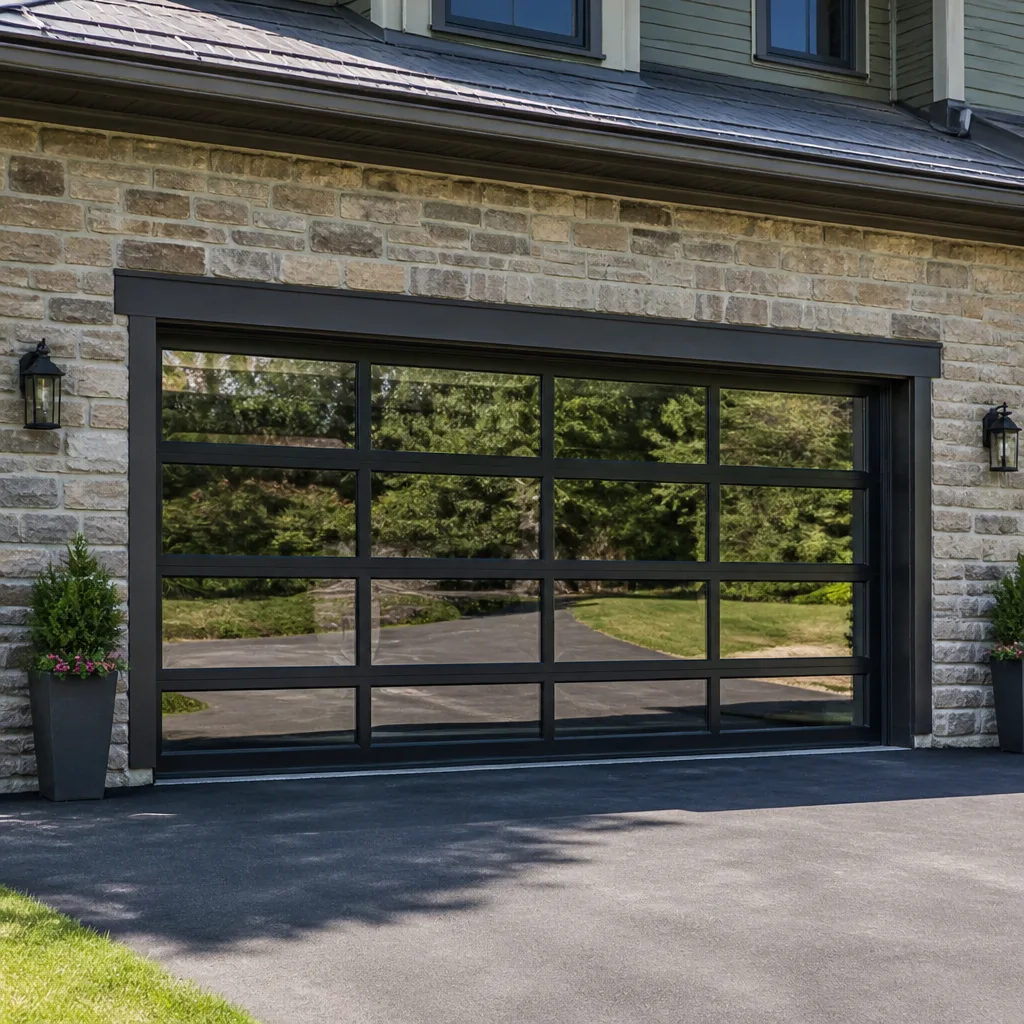 Full-view glass
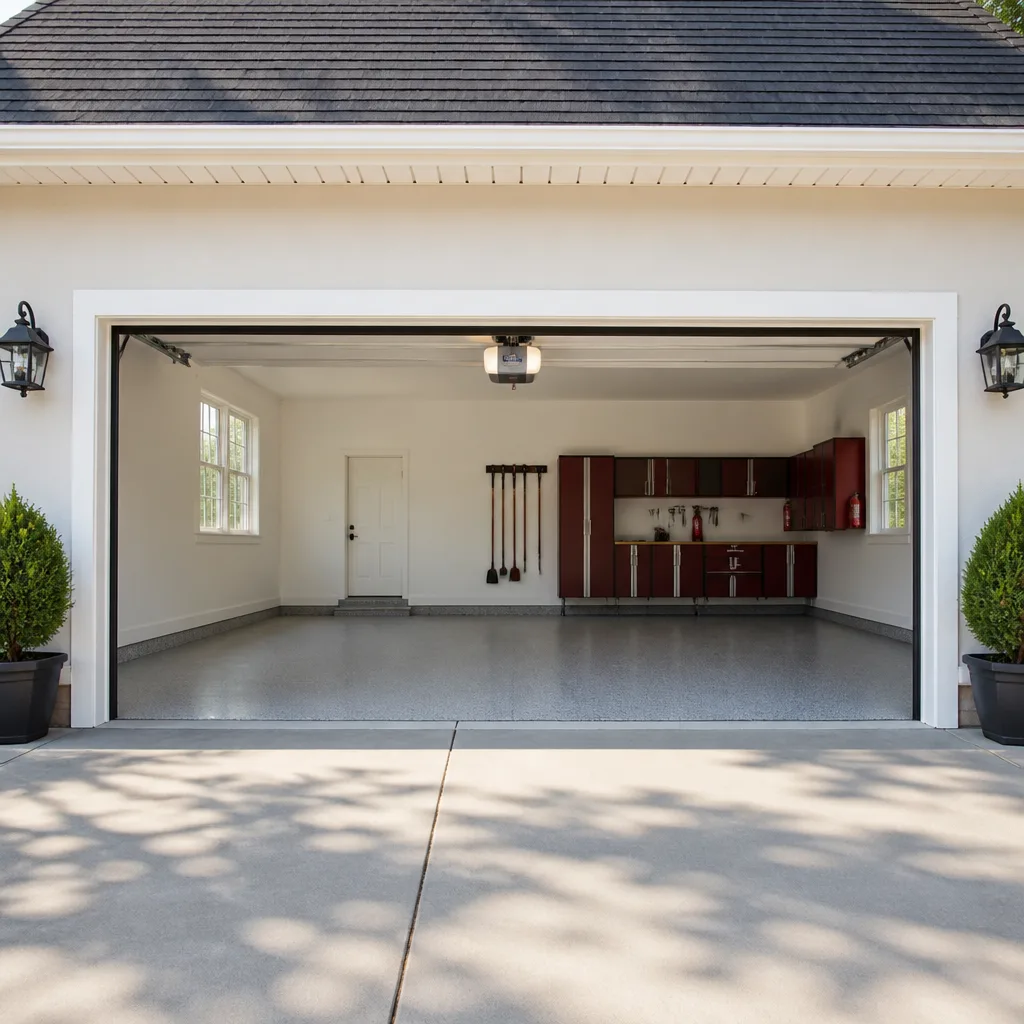 LiftMaster openers
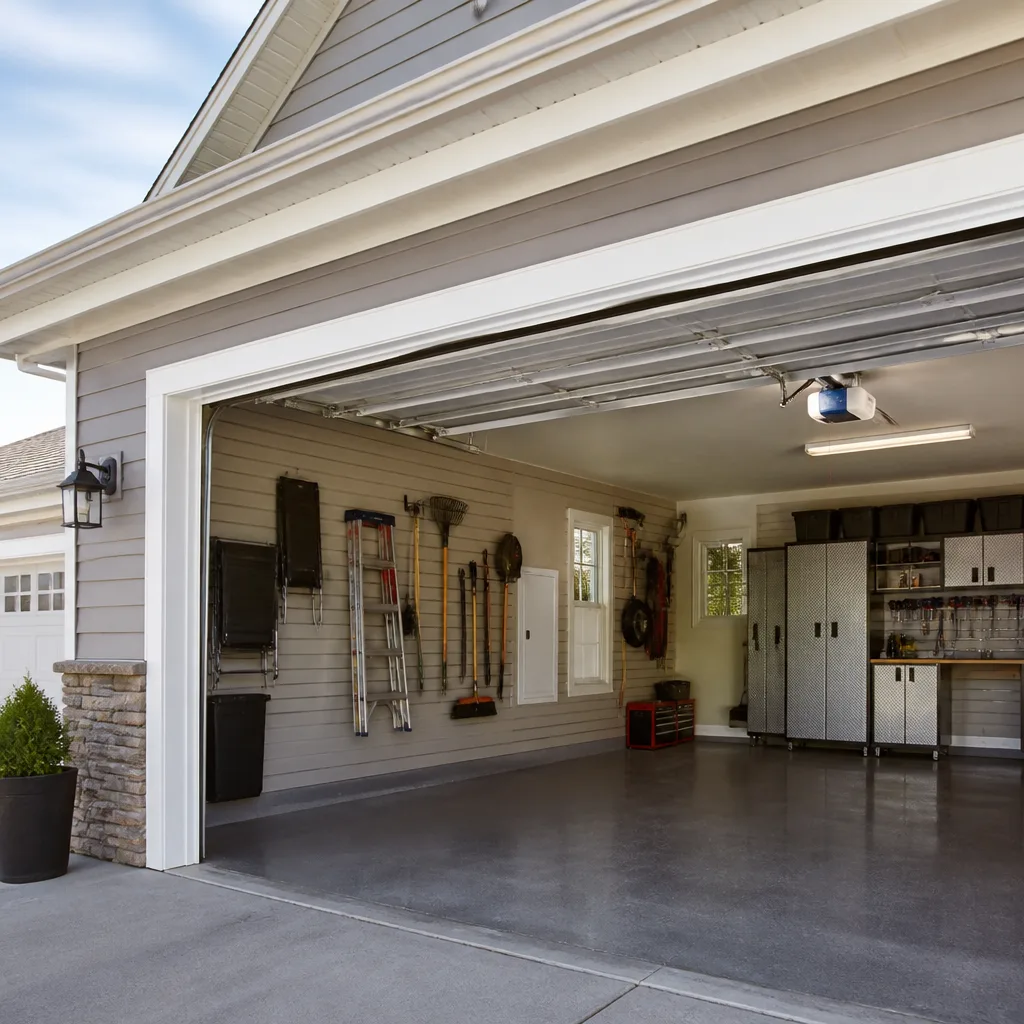 Chamberlain openers
Full 25-point door and opener safety check with every visit - springs, cables, rollers, tracks, and your LiftMaster or Chamberlain opener included
You get a price before we start. It does not change when the pro arrives.
Get your free estimateChoosing the Right Garage Door Brand: A Buyer’s Guide for Antioch
The most common brand-related mistake Antioch homeowners make isn’t picking the wrong manufacturer. It’s buying a door spec’d for a coastal California climate while living in a valley city that hits 105°F in July and gets blasted by Delta winds most summer afternoons. A door that performs beautifully in foggy Pacifica can cook, warp, and rattle in Antioch’s heat and dust. Brand matters, but the spec sheet behind the brand matters more. This guide walks through what actually affects a garage door’s life in Antioch: steel gauge, insulation R-value, opener compatibility, and what a “lifetime warranty” really covers. You’ll finish knowing how to read the fine print instead of trusting the showroom sign.
Quick Answer
For Antioch, the right garage door brand is the one whose door carries at least 25-gauge steel, an R-value of 13 or higher for an attached garage, and easy parts availability through East Contra Costa supply channels. Among the brands we work with most often here, Clopay and Amarr deliver strong insulation and steel specs at fair prices, while Chamberlain and Genie dominate the opener side. Installation quality and correct sizing usually outrank brand name for how a door actually performs in this climate.
Styles & brands we work with
- Raised-panel steel
- Carriage house
- Modern flush
- Full-view glass
- LiftMaster openers
- Chamberlain openers
Table of Contents
- The Local Reality: Why Antioch Climate Changes the Brand Math
- Brand Comparison: What’s Actually Available in the East Contra Costa Market
- How to Read Steel Gauge: Why 24 vs. 25 Gauge Isn’t a Minor Difference
- R-Value Selection for Antioch: The Case for R-13 or Higher
- The Opener Brand Question: When Matching Matters and When It Doesn’t
- What “Lifetime Warranty” Actually Covers Across Major Brands
- Why Installation Quality Outranks Brand Every Time
- Questions to Ask Before You Buy a Door in Antioch
The Local Reality: Why Antioch Climate Changes the Brand Math
Antioch sits in the Sacramento-San Joaquin River Delta, at the eastern edge of Contra Costa County, and the climate here is genuinely different from what most garage door marketing copy assumes. Summer highs regularly push past 100°F, and the Delta breeze that rolls in most afternoons brings gusts that can rattle a poorly anchored door every single day for weeks. Winter is mild, which sounds forgiving, but mild winters mean no reliable cold snap to kill off insects, dust, and the fine grit that blows off the Delta and works its way into door tracks and hinges.
What does this mean for brand choice? A door rated for a coastal California climate zone might specify an R-value of 6 and use a thin steel skin, because in Half Moon Bay the marine layer does most of the heavy lifting. In Antioch, that same door installed on an attached garage facing west will bake in the afternoon sun and force your air conditioner to fight the garage’s heat load all evening. A door spec’d with a higher insulation value, tighter panels, and heavier steel handles the same afternoon on the same driveway with far less wear.
Wind is the second local factor. The Delta breeze is not a gale, but it is persistent, and persistent wind tests anchors, hinges, and the structural rigidity of a door panel more than an occasional gust does. A door that feels solid in a showroom might flex and drum in a west-facing Antioch garage after two summers. That flex is a brand-and-spec problem, not an installation problem, and no amount of adjustment fixes it.
Antioch’s neighborhoods sit at varying elevations and exposures, from the low flats near the river to the rising ground toward the hills. A door facing east on a shaded lot is a different job than a door facing west on an open lot, even within the same Antioch city limits. Before you compare brands, know which way your garage door faces and whether it shares a wall with your living space.
Brand Comparison: What’s Actually Available in the East Contra Costa Market
A national ranking of “best garage door brands” is nearly useless to an Antioch homeowner. What matters is which brands a local technician can source parts for quickly, which ones actually get stocked through East Contra Costa supply chains, and which ones have a real service network when something fails. We work on Clopay, Amarr, Wayne Dalton, Raynor, LiftMaster, Chamberlain, Genie, and Craftsman systems, and after enough jobs you start to see which brands come back for small repairs and which ones don’t.
Here’s how the brands shake out on the dimensions that matter locally:
- Clopay – Wide range from basic steel to insulated carriage-house styles. Strong insulation options at the premium end, good dent resistance on the higher-gauge models. Parts are widely available locally, so a cracked panel or a bent hinge gets fixed fast rather than waiting on a special order.
- Amarr – Solid middle-market choice. Insulation and steel specs are competitive at each price tier, and the warranty documentation tends to be clearer than most. Local availability is decent for common sizes and finishes.
- Wayne Dalton – Common in existing Antioch homes, so familiarity helps when you’re replacing a door that matches the rest of the neighborhood’s architecture. Specs vary widely by product line, so read the actual sheet, not the sales pitch.
- Raynor – Heavier commercial-grade feel on many models, popular for larger residential doors. Parts availability can be slower than the big-volume brands, which matters if you’re mid-repair.
- Chamberlain and Genie – The two opener names you’ll see most in Antioch garages. Both make reliable legacy units and both have made a hard push into smart openers over the past several years. Repair parts are easy to source.
- LiftMaster and Craftsman – Also widespread in existing homes. LiftMaster is common on newer installs and Craftsman is common on older ones, and both are serviceable with the right parts on hand.
The honest truth about brand availability is that it changes. A brand that’s easy to source today can go through a supply crunch next year, and vice versa. That’s one reason we keep fluency across eight brands rather than specializing in one: if your door needs a specific part and it’s available, we can work with it, and if your brand is one of the widely-stocked ones, we can usually resolve the problem in the first visit.
How to Read Steel Gauge: Why 24 vs. 25 Gauge Isn’t a Minor Difference
Steel gauge for garage doors confuses people because the number runs backward from what feels intuitive: lower gauge numbers mean thicker steel. So a 24-gauge door skin is heavier and thicker than a 25-gauge skin, and a 26-gauge door is thinner still. The difference between 24 and 25 gauge might sound trivial in the marketing brochure, but in a family driveway in Antioch with kids, bikes, and a Delta wind that never quite stops, the difference in dent resistance becomes obvious after a few years.
A few things to understand before you compare numbers:
- Gauge applies to the door skin, not the frame. A door can have a 24-gauge skin over a lighter internal frame, or vice versa. Ask about both.
- Thicker isn’t automatically better for every application. A heavier door needs a larger torsion spring system and a more capable opener, which raises the install price. For a two-car door on an attached garage, 25-gauge is often the sweet spot. For a single door on a detached garage with little traffic, 26-gauge is fine.
- Dent resistance is the practical payoff. A 24-gauge skin resists dents from a basketball, a bike handlebar, or a garbage can better than 25-gauge. If your garage is also the de facto sports storage and the kids’ play zone, pay for the extra gauge.
- Finish quality amplifies or undermines the gauge. A thin door with a premium finish still dents; a thicker door with a cheap finish can rust. Look for both pieces of the spec.
- Ask for the gauge in writing. If the spec sheet doesn’t state it, the answer is “we’ll get back to you.” That’s a signal to keep looking.
In our experience working on Antioch doors, the most common premature replacement is not from mechanical failure. It’s from a door whose skin was too thin for the traffic in the driveway. A door that gets dented heavily at the bottom panel soon stops sealing properly against the weatherstripping, and once the seal fails, wind-driven dust and heat get inside the garage year-round. Buying one gauge heavier than the brochure suggests is usually the cheapest insurance you can add to the job.
R-Value Selection for Antioch: The Case for R-13 or Higher
R-value measures resistance to heat flow. Higher numbers mean better insulation. For a garage door in Antioch, the practical threshold most homeowners should consider is R-13 or higher for an attached garage. Below that, the door is doing very little to keep summer heat out of the space that shares a wall with your living room.
The math is simpler than it sounds. Your attached garage has three walls and a ceiling that are normally insulated, and one big opening covered by the door. In summer, that opening faces afternoon sun on a west-facing driveway and can radiate heat into the garage for hours. A non-insulated or lightly insulated door lets that heat pass through the panels almost freely. The garage becomes an oven, and the shared wall between garage and house carries some of that heat into the rooms where you actually live, forcing the air conditioner to work harder through the hottest part of the day.
Here’s how to think about R-value tiers for Antioch:
- R-0 to R-6 (non-insulated or lightly insulated) – Fine for a detached garage or a workshop where you don’t care about temperature. Not a good choice for an attached garage in the Delta heat.
- R-7 to R-12 (moderate insulation) – Better than nothing, but you’ll still feel a lot of heat transfer on a 100°F afternoon. Acceptable on a shaded east-facing door, less so on a west-facing one.
- R-13 to R-18 (well insulated) – The practical sweet spot for most Antioch attached garages. Keeps heat out during July and August and helps if you ever want to use the garage as a work area, home gym, or workshop year-round.
- R-19 and above (heavily insulated) – Worth considering if the garage shares two walls with living space, or if you plan to condition the space. Costs more and weighs more, so it needs a heavier spring and a more powerful opener.
R-value is measured in layers: polyurethane foam between two steel skins holds more heat back per inch than polystyrene, and you pay for that difference. If a salesperson quotes an R-value without telling you which insulation type is inside, ask. Two doors can have the same R-value on paper and behave very differently in a 105°F Antioch summer because one uses foam and the other uses a thinner beadboard material that settles over time.
We’re not going to give you a precise savings figure, because those numbers shift based on your house, your habits, and how tightly the rest of the envelope seals. What we can tell you is that in this climate the R-13 threshold exists for a reason. Below it, an attached garage is fighting summer heat with one hand tied behind its back.
The Opener Brand Question: When Matching Matters and When It Doesn’t
There’s a lot of noise in the market about matching your opener brand to your door brand. Most of it is wrong. For basic operation, a Chamberlain opener runs a Clopay door, an Amarr door, and a Wayne Dalton door just as well, because openers care about door weight, balance, and travel distance, not the manufacturer’s logo. Matching brands makes sense in one specific case: when you’re building an integrated smart home system where you want one app, one voice assistant flow, and one warranty path for the whole setup.
Outside that, the match question is really about these factors:
- Door weight and opener capacity. A new insulated door weighs more than the old one it replaced. If your opener was sized for the original door, the match doesn’t matter because the opener needs to be replaced anyway.
- Smart home integration. If your garage opener needs to talk to your home’s app ecosystem, matching the opener to that system is worth the effort. Chamberlain and Genie have both built out strong smart-opener lines, and both work with major voice platforms.
- Parts and service familiarity. More important than brand-matching is whether the opener brand has a service network that can resolve failures quickly. Both Chamberlain and Genie do. That’s a big part of why they’re so common in Antioch garages.
- Legacy systems. If you have an older Craftsman or LiftMaster opener that still works, there’s often no reason to replace it when you install a new door, as long as it can handle the new door’s weight.
- Safety features. Any new or replacement opener needs working safety sensors and a functioning auto-reverse. Brand matters far less than whether those safety systems are correctly installed and tested.
When the door and opener both need attention, having one company look at the whole system saves you the coordination headache. Door installation, opener replacement, and the balance check that ties them together are all part of the same job. Our garage door opener repair service covers both the mechanical drive side and the electronic control side of modern openers, so the smart-home question gets answered as part of the visit rather than as a separate appointment.
What “Lifetime Warranty” Actually Covers Across Major Brands
Two garage door brands can both advertise a “lifetime warranty” and mean radically different things. This is the single most overlooked piece of the purchase decision, and it’s where a lot of Antioch homeowners end up disappointed three years after installation. A lifetime warranty typically covers the door sections against defects for as long as you own the home, but it usually does not cover labor, springs, hinges, rollers, and sometimes not even the factory finish.
What to compare line by line:
- Section coverage. Most major brands offer a limited lifetime warranty on the door panels against manufacturing defects. Read the word “limited” carefully, because it usually means the warranty doesn’t cover damage from impact, weather, or improper installation.
- Labor. This is the biggest gap. A warranty that covers the part but not the labor still leaves you paying for the visit and the swap. Some brands offer a labor allowance for a limited period; most don’t.
- Hardware and springs. These are the wear items. They usually carry a much shorter warranty (often one to five years, sometimes not at all), and springs are typically excluded from lifetime coverage regardless of brand.
- Finish and appearance. Some brands warranty the paint finish for a set period; others treat finish as cosmetic and exclude it. On a west-facing door in Antioch, sun-fade is a real risk, so this matters more here than in cooler climates.
- Transferability. A warranty that transfers to the next homeowner adds real resale value. Ask whether it transfers and what the process is.
- Proper installation as a condition. Nearly every warranty states that coverage is voided if the door wasn’t installed by a qualified installer or if it was modified after installation. Keep your paperwork.
Our advice: ignore the word “lifetime” and read the exclusions page. The exclusions page is where you learn whether the warranty is a real asset or a marketing line. If you can’t get the actual warranty document before you sign, that’s a red flag on the sale itself.
Why Installation Quality Outranks Brand Every Time
The best-spec’d door on the market will underperform if the installation is sloppy. In our experience working on Antioch doors, the vast majority of “this brand is junk” complaints trace back to a door that was installed out of level, with insufficient anchoring, or with the wrong spring for the door’s weight. Brand had nothing to do with it. The installer cut corners and the homeowner blamed the label.
What proper installation looks like:
- Correct sizing. The door is measured for the actual opening, not the rough opening from the framing plan. A door that’s a quarter-inch off will rub.
- Level and plumb. The door track is checked for level front to back and side to side. A track that’s off by a small amount makes the door work harder on every cycle.
- Correct spring sizing. The torsion springs are matched to the door’s actual weight and cycle life. This is where “the door’s too heavy” complaints come from most often.
- Proper anchoring. In a Delta wind environment, the anchors hold the door against consistent daily pressure, not an occasional gust. Anchor depth and spacing matter.
- Weatherstripping and seals. Bottom seal, side seals, and top seal all fitted correctly so dust and heat stay out.
- Safety check. Auto-reverse tested, safety sensors aligned, force settings calibrated.
This is also where the brand question becomes less important than the answer to “who’s doing the install?” A well-installed mid-tier door from a widely stocked brand usually outperforms a poorly installed premium door from any brand. On the repair side, that same logic holds: a technician who knows the door’s spec and the parts chain is worth more than a technician who’s guessing. That’s why our garage door repair work centers on understanding the system before we touch it.
Questions to Ask Before You Buy a Door in Antioch
Bring this list to any showroom or estimator. If you don’t get clear answers to all of it, keep shopping.
- What is the steel gauge on this door? Ask specifically. If the answer is vague, ask for the spec sheet.
- What R-value does this door carry, and what insulation is inside? Ask the type (polyurethane, polystyrene, beadboard), not just the number.
- How many cycles are the springs rated for? The answer is usually a range; anything below 10,000 cycles is a short-life spring.
- What does the warranty cover for labor and hardware? Read the exclusions page before you sign.
- Is this brand stocked locally, or will parts be special-ordered? Local availability is the difference between a two-day fix and a two-week wait.
- Which opener, if any, does this door need? Match the capacity to the loaded weight of the door, not the marketing brochure.
- How will the installer account for the west-facing sun exposure here? A good answer will mention R-value, finish quality, and seal fit, not just brand name.
- Who is actually doing the installation? Ask about the technician’s experience. Our technicians have up to 11 years of experience, and we’re happy to explain what that experience covers.
Common Mistakes to Avoid
- Buying on brand name alone. Two doors from the same manufacturer can differ in gauge and insulation by a wide margin. The label on the box doesn’t tell you which one you’re getting.
- Under-speccing insulation on an attached garage. Saving a modest amount on a thinner door to then run air conditioning against an oven of a garage isn’t a saving. Aim for R-13 or higher on attached garages in Antioch.
- Ignoring local parts availability. A door you can’t get parts for in East Contra Costa is a door that sits broken longer than it should. Common brands and common sizes are the safer bet.
- Skipping the warranty exclusions. A “lifetime warranty” that excludes labor, hardware, and finish can leave you paying nearly the full repair cost when something goes wrong. Read the whole document, not the cover page.
- Replacing the door without checking the opener. A new insulated door adds weight. If the opener was sized for the old door, the new one will strain it. Check the weight and capacity together.
- Choosing a “specialist” who isn’t one. A general handyman outfit that installs a door twice a year won’t have the same stack of experience with your specific door line as a company whose whole schedule is garage doors.
- Ignoring west-facing sun exposure. A door that faces the afternoon sun in Antioch’s summer takes far more heat and UV than one facing east. Ask how the finish and insulation hold up under that specific load.
See the difference
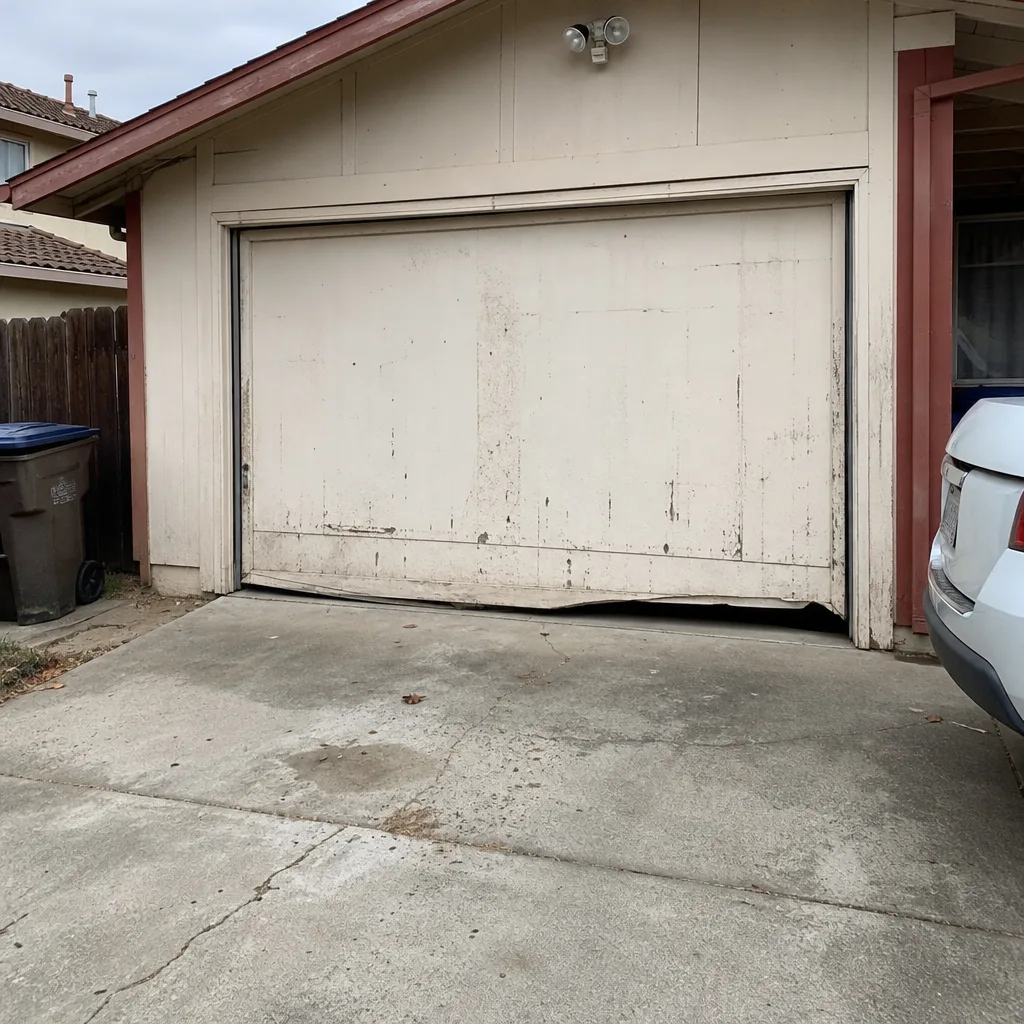 Before
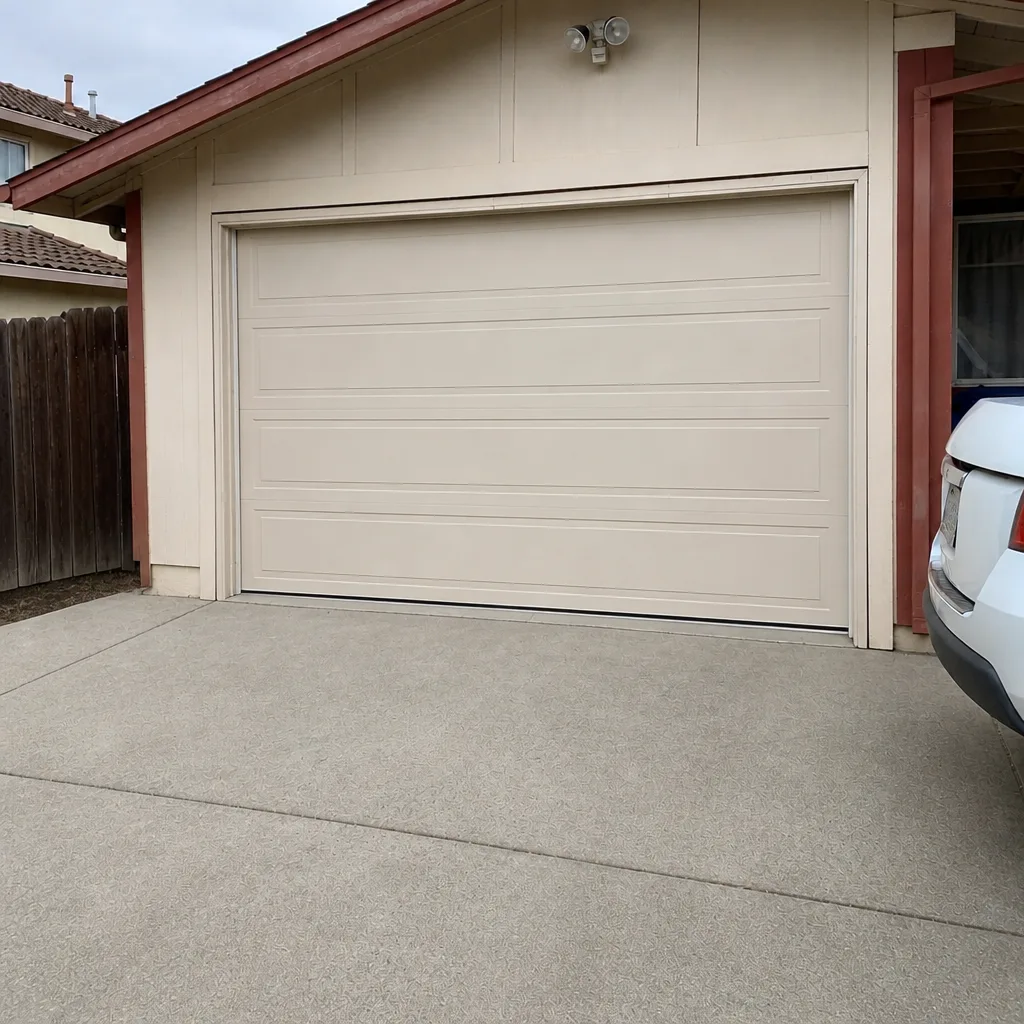 After
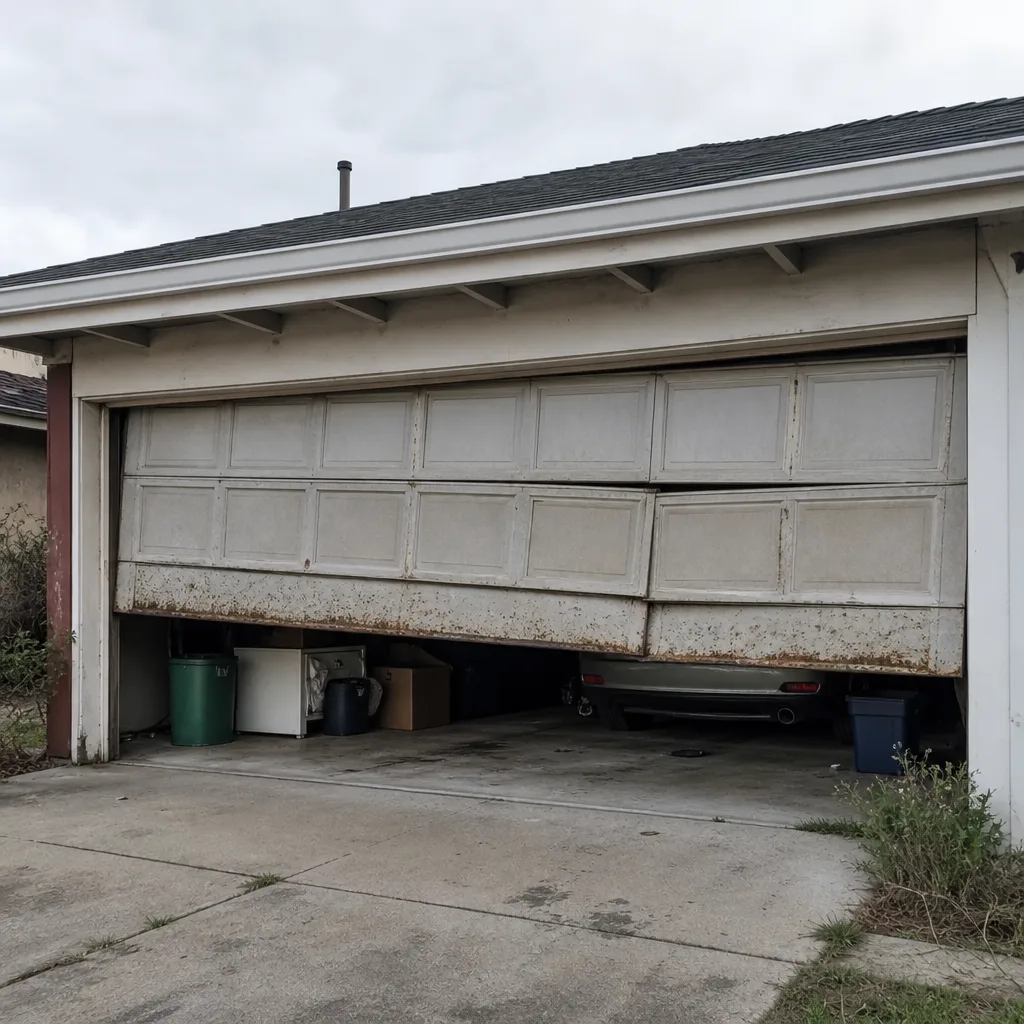 Before
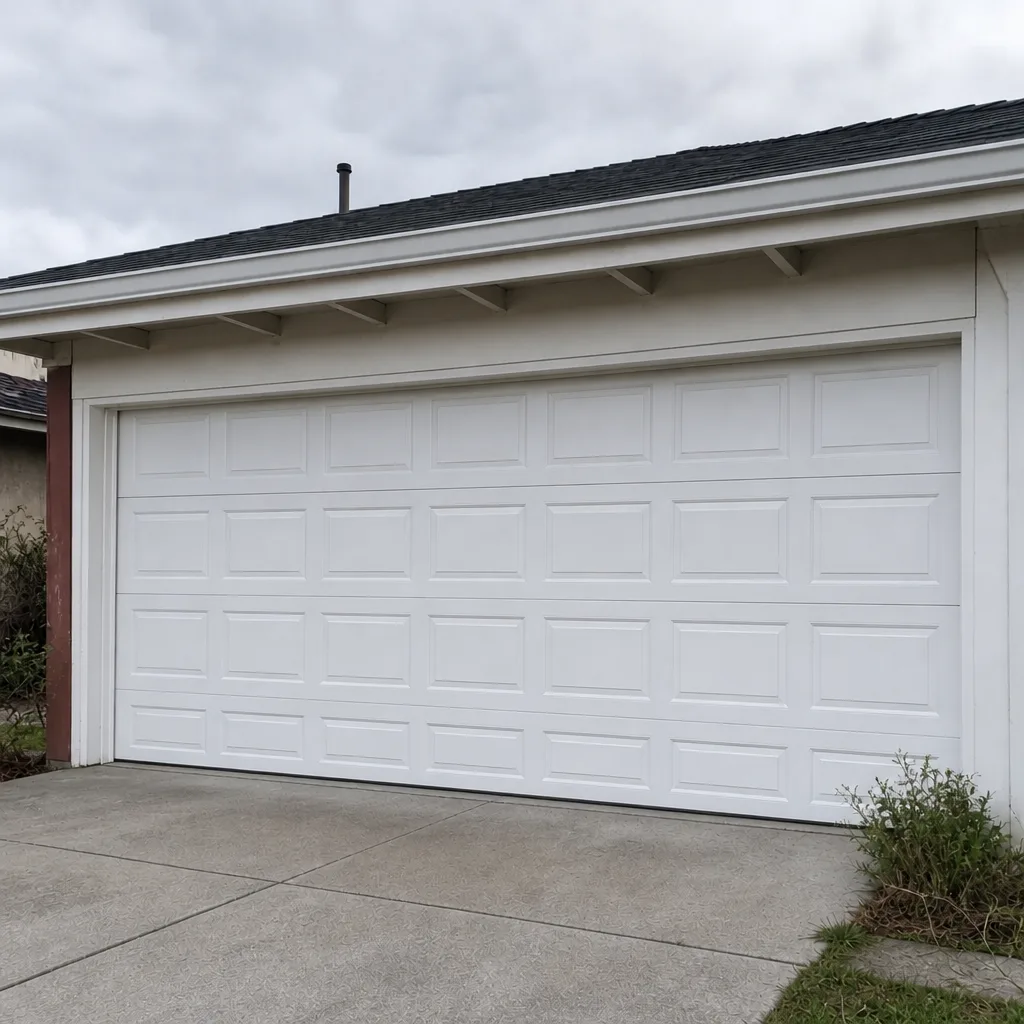 After
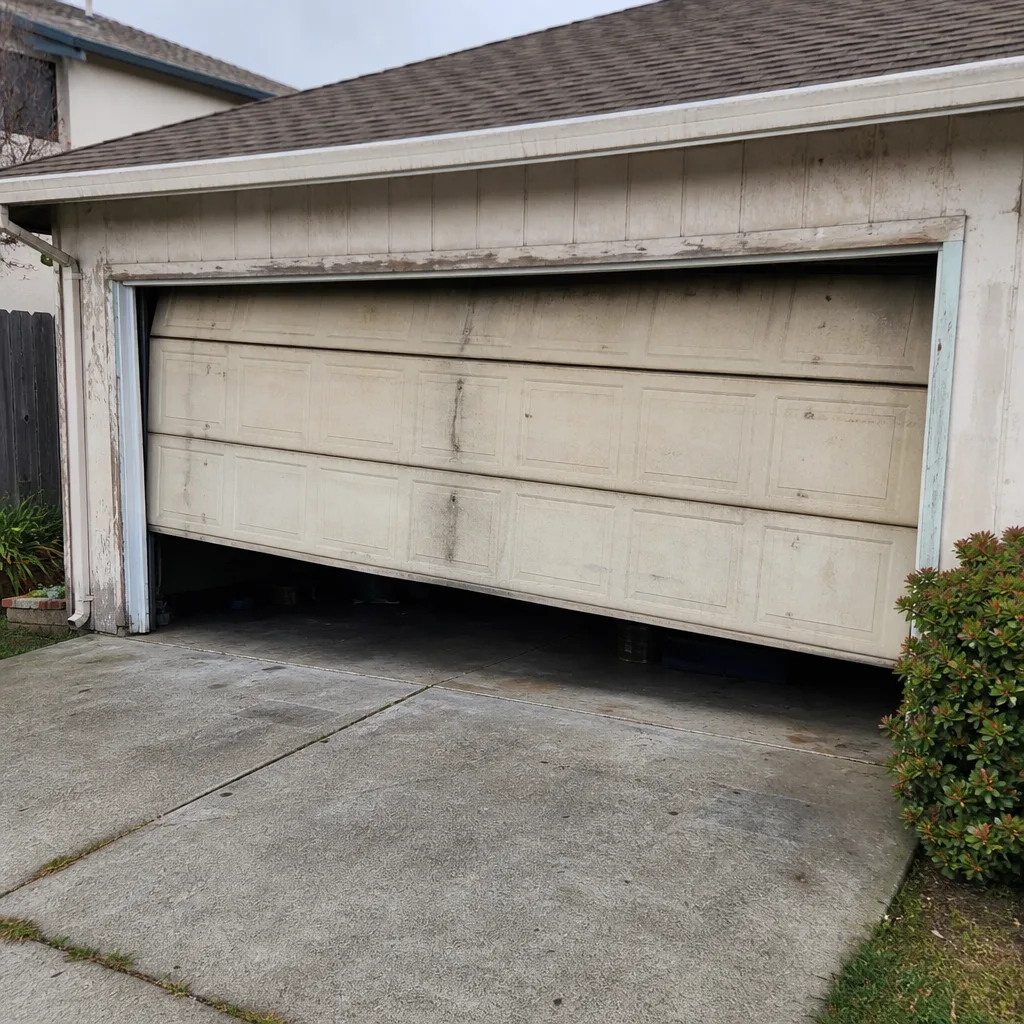 Before
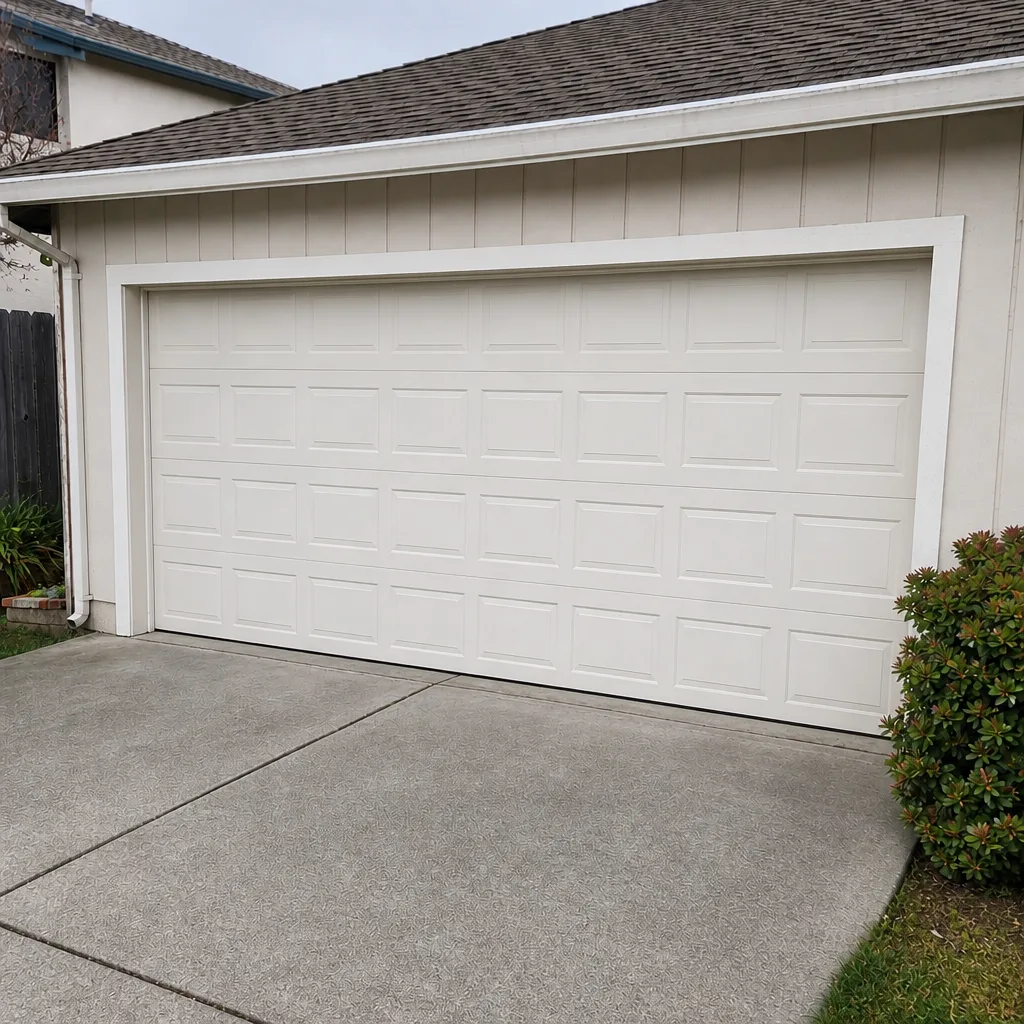 After
When to Call a Professional
If you’re choosing a new door, a professional estimate is worth having before you buy, because the estimate should account for the actual opening, exposure, and existing opener capacity, not just the catalog page. If your current door is binding, dented, or spring-loud, that’s a repair question rather than a purchase question, and the right answer might be a repair rather than a replacement. Spring work in particular is genuinely dangerous: the torsion springs used on most Antioch homes are under high tension, and handling them without the right tools and training causes serious injury. Same goes for the electrical panel work that sometimes accompanies an opener replacement. Those are jobs for a trained technician, full stop.
Sawyer Garage Door Repair offers free estimates in Antioch, and we work on the door, the opener, and new installs as one system rather than three separate projects. We’re fluent in LiftMaster, Chamberlain, Genie, Clopay, Amarr, Wayne Dalton, Craftsman, and Raynor, so the brand question rarely sends us looking for a subcontractor. Call (866) 944-5178. We answer 24/7. Fast dispatch from 7am to 7pm, Sunday through Friday.
Frequently Asked Questions
There’s no single best brand, but the best spec for an attached garage in Antioch is a door with at least 25-gauge steel, an R-value of 13 or higher, and easily available parts. Clopay and Amarr are both strong fits because their insulation and steel specs are competitive and their parts are widely stocked locally. For detached garages or shaded east-facing doors, moderate insulation is fine, and brand matters less than correct installation. Call (866) 944-5178 for an exact quote – estimates are free.
No, not for basic operation. A Chamberlain opener runs a Clopay door just as well as a Chamberlain door, because openers care about door weight, balance, and travel, not the door’s label. Matching brands matters when you’re building a smart home system where you want one app and one warranty path. If you’re replacing both door and opener anyway, that’s the moment to think about matching.
That depends on size, gauge, insulation, and whether the opener and hardware are part of the job, so we don’t quote a range in writing until we’ve seen the opening. We give a free estimate in person and set the price in writing before any work starts. Call (866) 944-5178 for an exact quote – estimates are free.
Usually limited lifetime coverage on the door sections against manufacturing defects, with labor, hardware, springs, and often finish excluded. Two brands can advertise “lifetime” and mean very different things on the exclusions page, so read the actual warranty document before you buy. If the seller won’t share it up front, ask why.
Often not without a check. An insulated door weighs more than a non-insulated one of the same size, and an opener sized for the old door can strain or fail under the new load. Have the loaded door weight and the opener’s capacity compared before the new door is installed. This is also a good moment to check the opener’s drive and control components.
Yes. We work as a state-licensed, insured garage door specialist, and our technicians have up to 11 years of experience on the door, the opener, and new installs. The work is confined to garage doors, which is why diagnosis tends to be faster and callbacks fewer. Call (866) 944-5178 to schedule a free estimate in Antioch.
The Bottom Line
Brand choice matters for garage doors in Antioch, but not in the way most showroom conversations frame it. What actually affects performance in this climate is steel gauge, insulation R-value, parts availability through East Contra Costa supply channels, and installation quality. Aim for at least 25-gauge steel, R-13 or higher on an attached garage, and a door whose brand has local parts support. Then read the warranty exclusions page, not the headline. Match the opener to the loaded door weight rather than the door label. And when in doubt, get a professional estimate that accounts for your specific opening, exposure, and existing system. The brand on the box is the start of the conversation, not the end of it.
Sawyer Garage Door Repair works on the door, the opener, and new installations as one specialist job, and we’re fluent in the eight brands most commonly installed in Antioch homes. If you want a second opinion on a brand or a door you’re considering, we’ll tell you what we’ve seen without upselling. Call (866) 944-5178 for a free estimate.
Written by the team at Sawyer Garage Door Repair.