
Last updated November 16, 2026
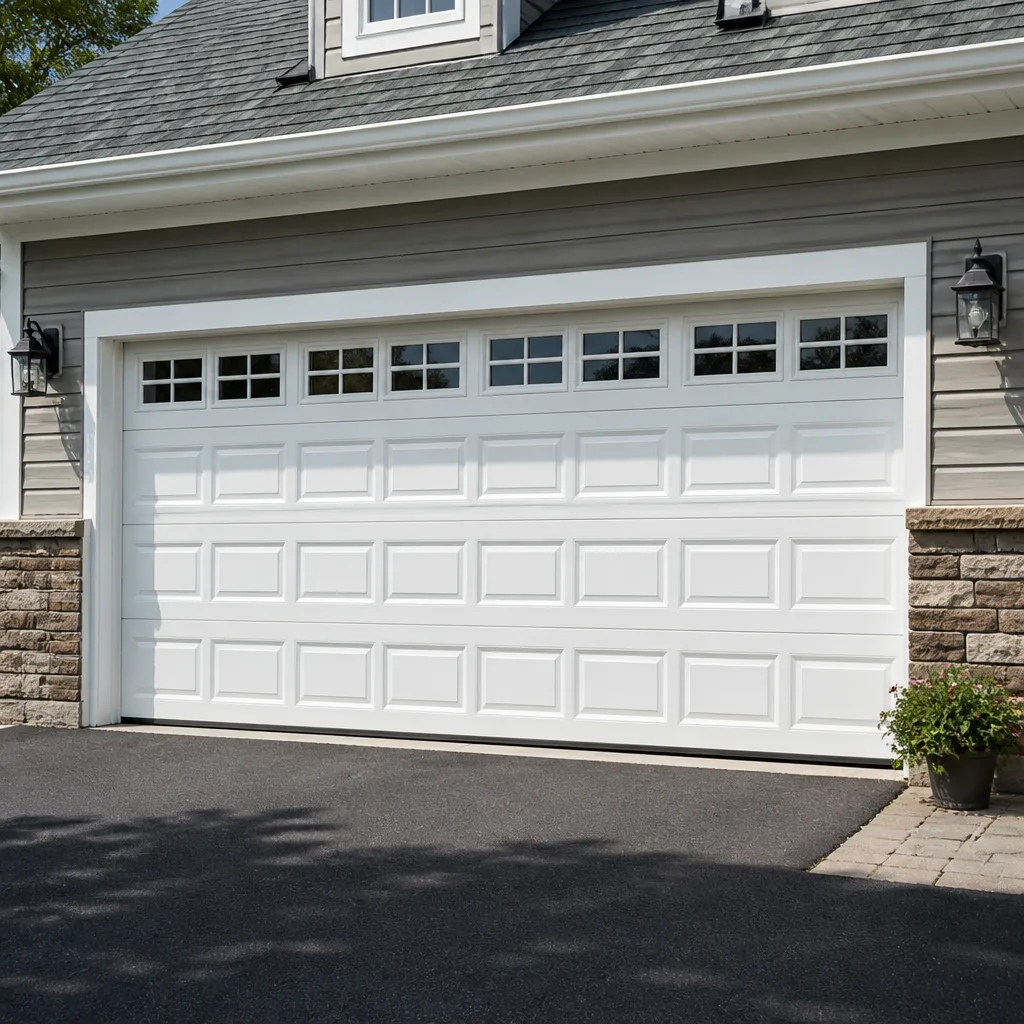 Raised-panel steel
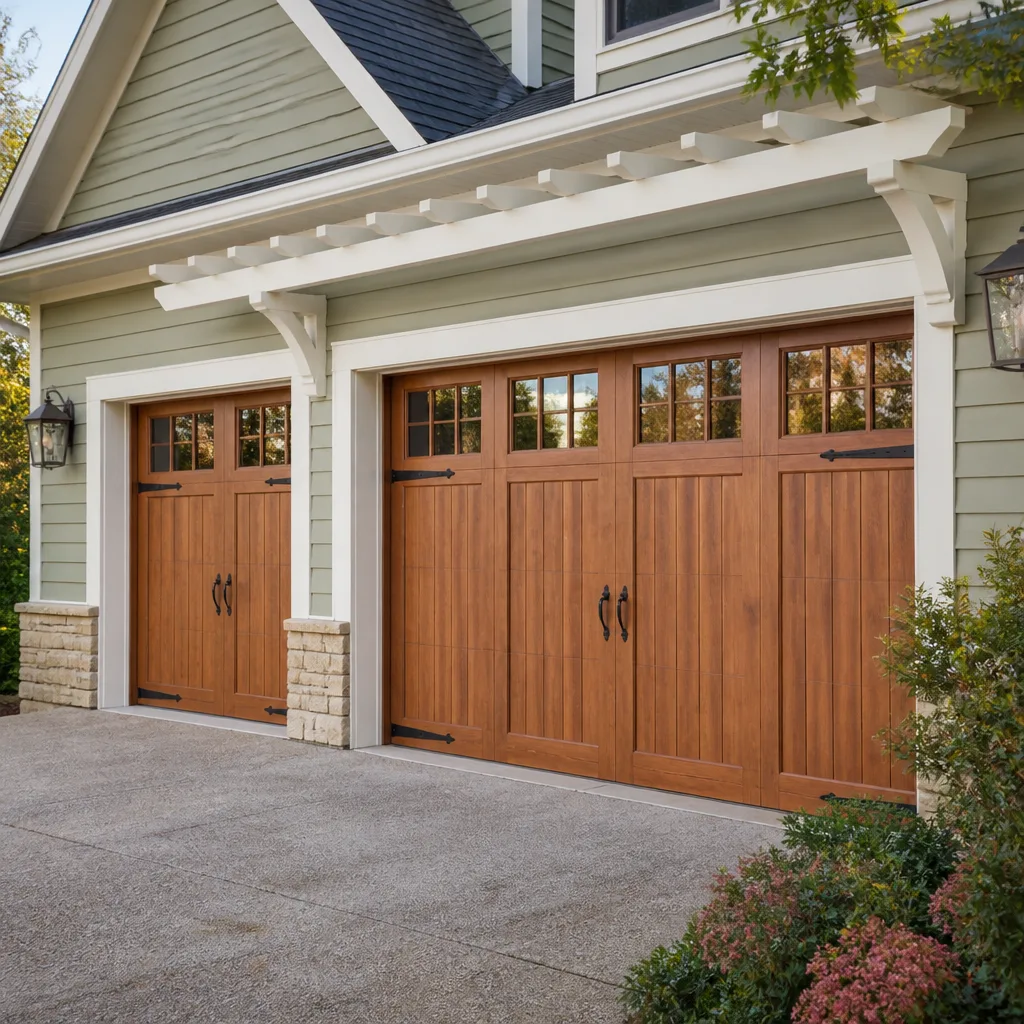 Carriage house
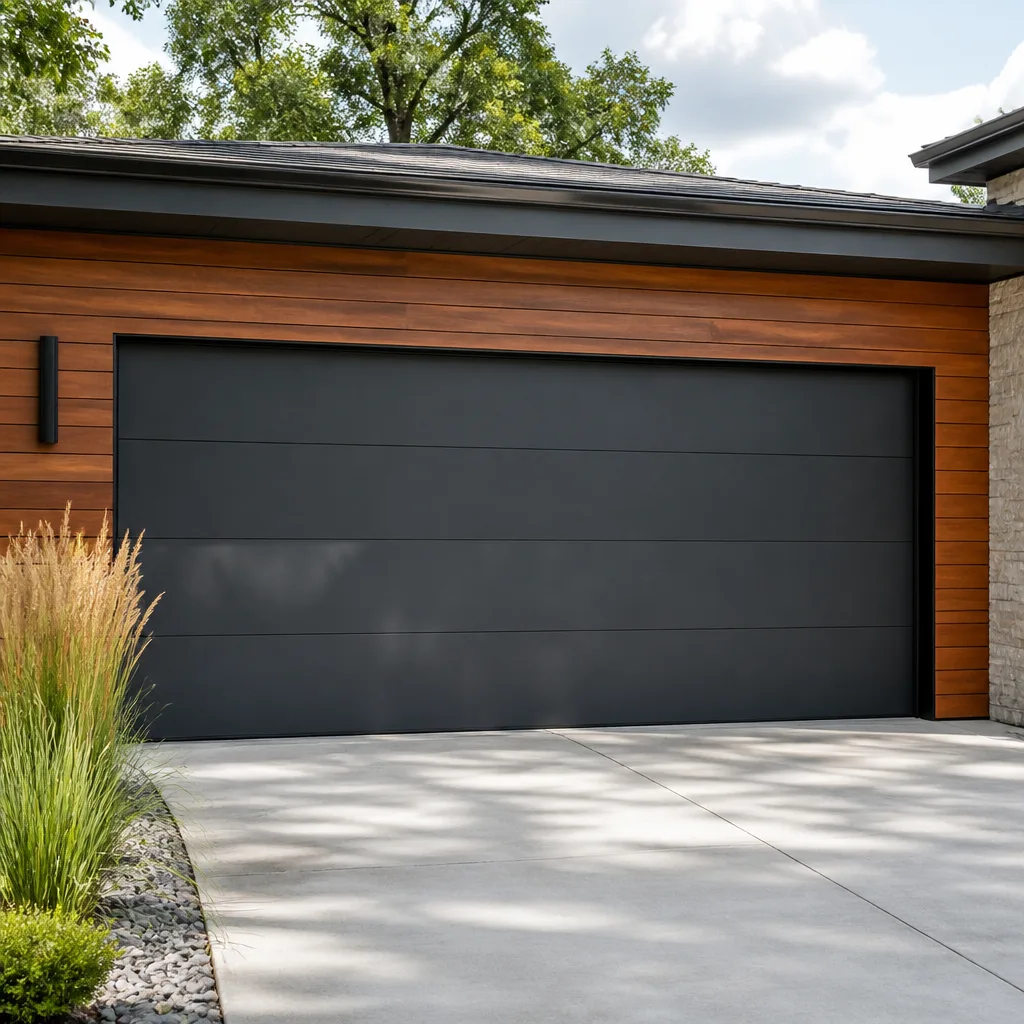 Modern flush
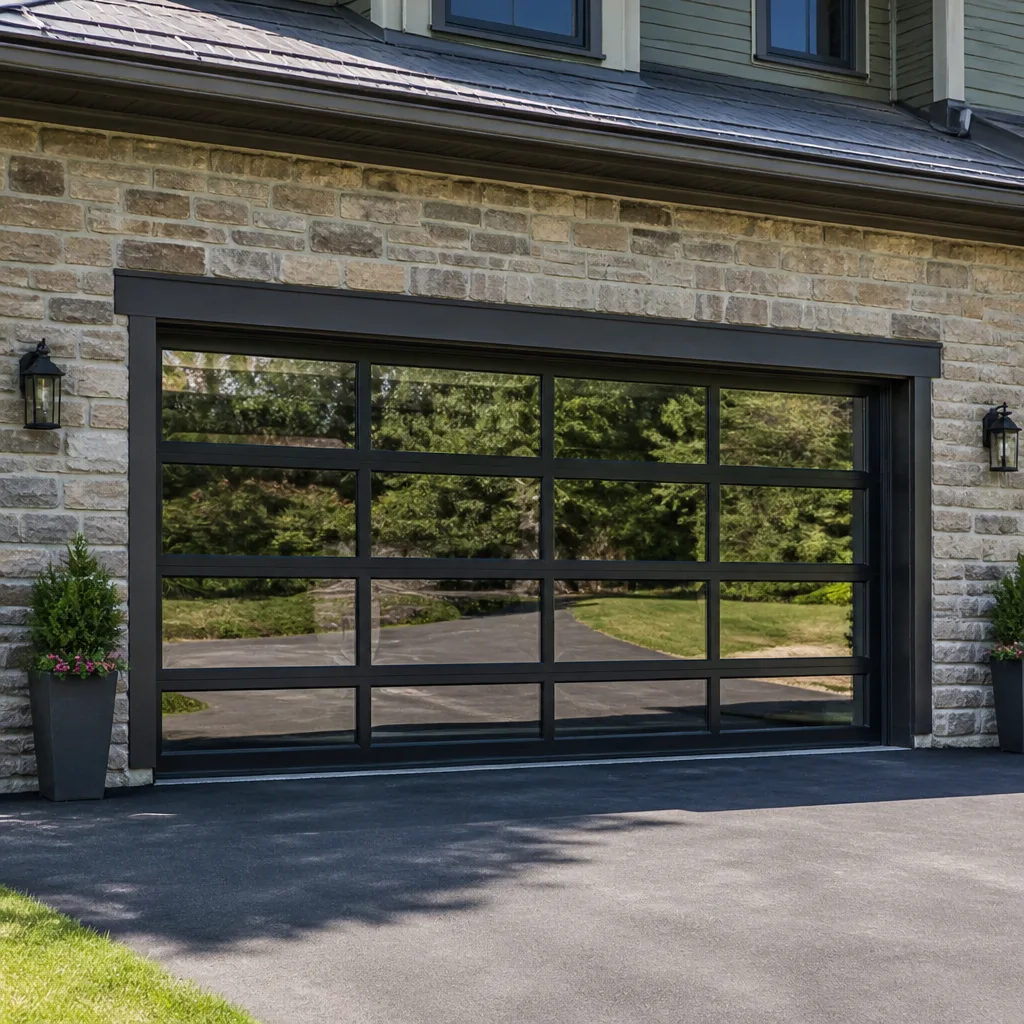 Full-view glass
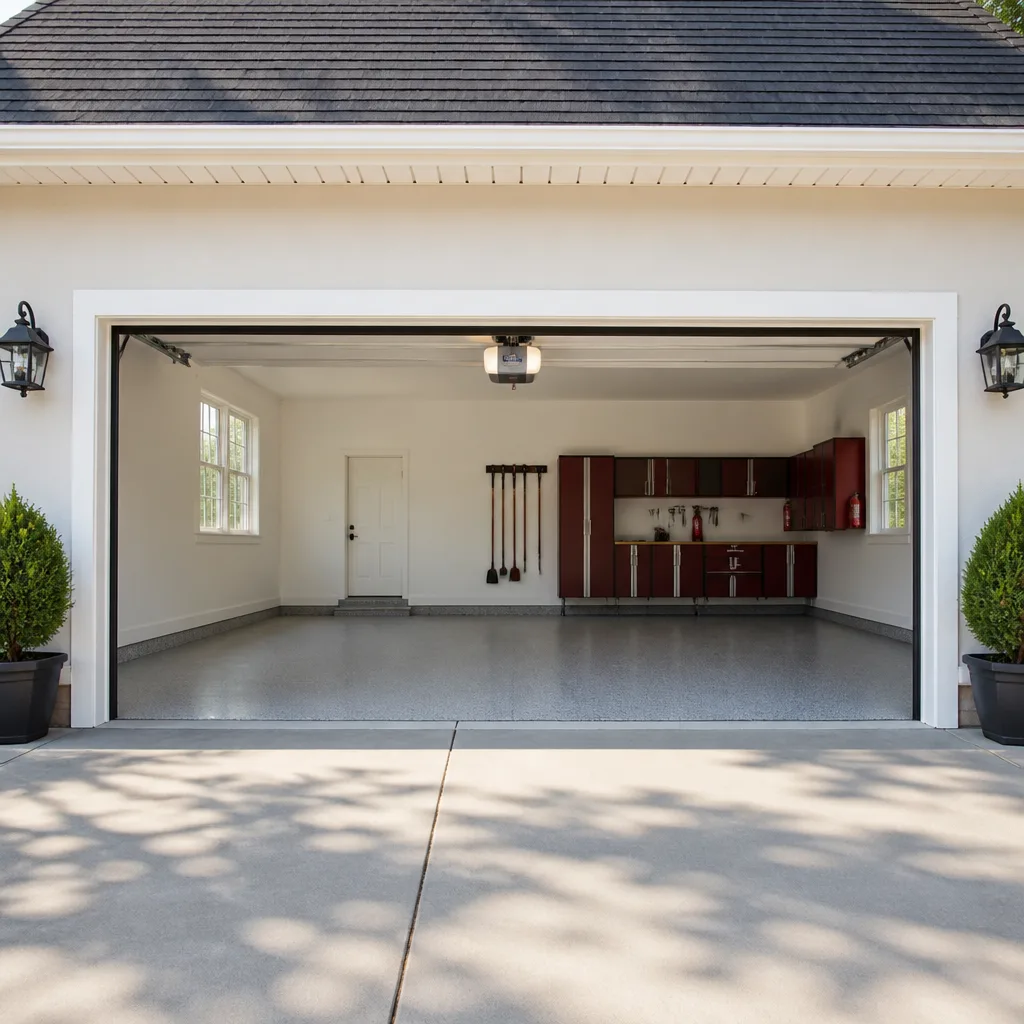 LiftMaster openers
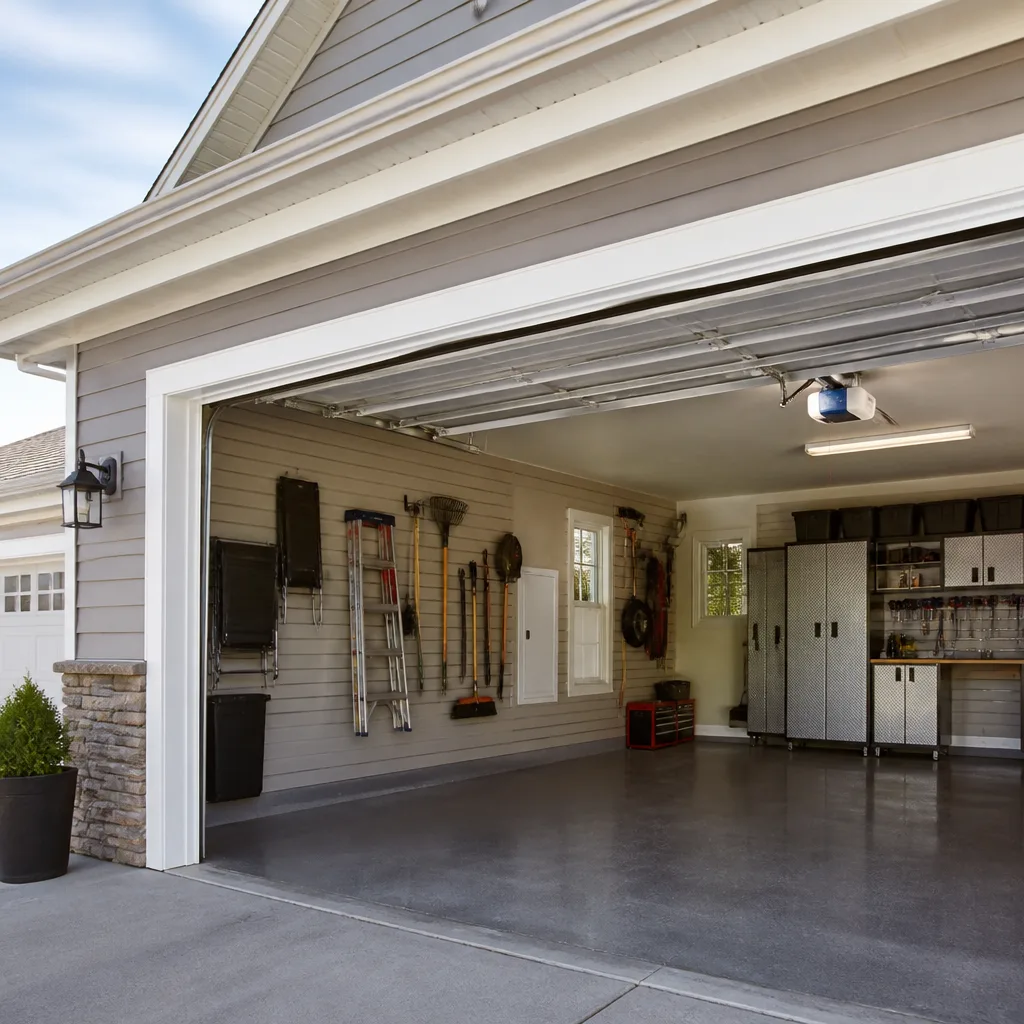 Chamberlain openers
Full 25-point door and opener safety check with every visit - springs, cables, rollers, tracks, and your LiftMaster or Chamberlain opener included
You get a price before we start. It does not change when the pro arrives.
Get your free estimateGarage Door Repair Troubleshooting in Antioch: Common Problems and How to Fix Them
The door that “just stopped working” overnight almost never actually stopped overnight. In the weeks before it quit, it was telling you something: a hesitate at the top of travel, a shudder on the way down, a click where there used to be a hum. Most homeowners tune those signals out until the door won’t move at all. Here’s the better approach. This guide teaches you to sort a garage door problem into one of three root categories – mechanical, electrical, or alignment – so you know immediately whether it’s a five-minute fix or a call to a specialist. We’ll cover how Antioch’s Delta breeze and summer heat drive a specific pattern of failure, the exact sounds that precede a broken spring, and the honest line between what you can safely adjust and what needs trained hands.
Quick Answer
Most garage door failures in Antioch come down to one of three root causes: mechanical wear (springs, cables, rollers, hinges), electrical faults (opener logic board, safety sensors, remote pairing, wiring), or alignment issues (track out of plumb, door off balance, panel out of square). Identify which category your symptom belongs to before touching anything. Mechanical spring and cable problems are the dangerous ones – those require a trained technician, while sensor alignment and remote issues are usually safe to check yourself.
Styles & brands we work with
- Raised-panel steel
- Carriage house
- Modern flush
- Full-view glass
- LiftMaster openers
- Chamberlain openers
Table of Contents
- The Three-Category Triage System: Know What You’re Dealing With
- How Antioch Heat and the Delta Breeze Accelerate Wear
- The Sounds a Door Makes Before a Spring Breaks
- Why Resetting the Opener Is Rarely the Real Fix
- Alignment and Track Problems in Antioch Homes
- The ‘Stop Here’ Line: What You Can Safely Adjust vs. What Needs a Tech
- Brand-Specific Troubleshooting: LiftMaster, Chamberlain, Genie, Raynor
- What Repairs Typically Cost and How We Estimate
The Three-Category Triage System: Know What You’re Dealing With
Before you do anything else, categorize the problem. Ninety percent of what we see on a diagnostic visit falls cleanly into one of three buckets, and each bucket has its own safety rules and its own likely fixes. Getting the category right is the whole game.
1. Mechanical
Mechanical problems involve the parts that physically move and carry load: torsion springs, extension springs, cables, drums, rollers, hinges, and the door panels themselves. Symptoms include a door that won’t lift, a door that slams down, a visible gap in a spring coil, a cable hanging loose off its drum, or a door that feels impossibly heavy when you try to lift it by hand (with the opener disengaged, and only if you can do so safely). Mechanical issues usually get worse, not better, if the door is cycled again. Some are genuinely dangerous.
2. Electrical
Electrical covers everything from the wall button to the opener’s circuit board. Symptoms: the opener hums but nothing moves, the motor runs but the door stays put, the remotes stop working, the door reverses immediately after touching the floor, or the opener beeps and blinks a code. Many of these are safe to investigate yourself. A few point to a failing logic board or a burned-out capacitor that needs replacement.
3. Alignment
Alignment is the sneaky one. The door is mechanically sound and the opener is fine, but the track has shifted a fraction of an inch, the photo-eye sensors are looking past each other, or a panel is slightly out of square. Symptoms: the door binds partway up, scrapes along one side, stops at the same spot every time, or closes and immediately reverses. Alignment problems in Antioch often appear during the seasonal transition into summer, when the garage structure itself expands and settles with the heat.
Here’s a fast reference table to orient yourself:
| Symptom | Likely Category | DIY-Safe? |
|---|---|---|
| Door won’t lift, feels heavy | Mechanical (spring/cable) | No – stop and call |
| Opener hums, door doesn’t move | Electrical (capacitor/board) | Possibly – inspect only |
| Remote stopped working | Electrical (pairing/battery) | Yes |
| Door reverses at floor | Alignment (sensor) or force limit | Yes, for sensor angle |
| Loud bang, door drops | Mechanical (spring snapped) | No – call now |
| Door binds at one spot | Alignment (track/roller) | Possibly – visual check only |
| Door sags on one side | Mechanical or alignment | No |
How Antioch Heat and the Delta Breeze Accelerate Wear
Antioch’s climate is a specific mix: hot inland summers combined with the daily push of the Delta breeze through the river corridor. That pattern has a real effect on garage door hardware, and understanding it helps you anticipate problems before they become emergencies.
Heat cycles and spring fatigue
Torsion and extension springs are steel under constant tension. Every time the metal heats and cools, it expands and contracts slightly. In the warmer months, a garage on Antioch’s south or west side can get hot enough that the steel in the springs goes through thousands of these micro-cycles. Over years, that fatigue builds up. Springs don’t usually fail because someone did something wrong – they fail because metal gets tired, and hot summers make metal tired faster than cooler inland winters do.
Track expansion and the breeze
The daily Delta breeze matters too. In Antioch, the wind picks up most afternoons, and that gentle, constant pressure on a garage door creates small rattles and vibration that work loose bolts over time. Add summer heat that expands the metal track and the wood or steel framing it’s mounted to, and you get exactly the kind of alignment shift that makes a door scrape or bind at one spot. Coastal climates with a narrower temperature range don’t see as much of this. Antioch does.
What this means for you
- Lubricate the rollers, hinges, and springs a couple of times a year – before summer, and again going into fall.
- Walk around the door and visually check the track bolts, especially where the track bends at the curve.
- Listen for a new rattle when the afternoon breeze comes up. A door that used to be quiet isn’t supposed to get loud.
- Watch for scraping on one side of the door. That’s your early alignment signal.
If you’d rather have a trained eye look it over, our garage door repair service covers adjustments and tune-ups that catch these issues before a spring goes.
The Sounds a Door Makes Before a Spring Breaks
This is the part we wish more homeowners knew. A spring rarely snaps without warning. In the weeks before it fails, the door and its hardware produce a fairly reliable set of sounds, and each one means something specific.
1. A single sharp crack, then silence
By the time you hear this, the spring has already broken. It sounds like a gunshot from the garage and is followed by the door staying put or dropping. If you hear this, disconnect nothing, don’t force the door, and call a specialist.
2. A rhythmic clicking on every cycle
A consistent click that repeats in the same part of the travel usually means a cracking hinge plate, a dry bearing, or a roller that’s developed a flat spot. It’s not a spring failure yet, but it’s the door asking for service. Left alone, a dry roller can seize and start dragging the track out of alignment.
3. A grinding or scraping growl
This is metal-on-metal, and it usually comes from a roller that’s stopped rolling and is now sliding, or from a torsion spring that’s rubbing against its shaft because the drum has moved. Grinding accelerates. Get it looked at before it turns into a track replacement.
4. A pop or twang during operation
A single pop during lift, especially at the same point every cycle, can signal a partially wound spring or a cable slipping on its drum. This is the one that most often precedes a full spring break by a week or two. Don’t wait it out.
5. A thud at the bottom
If the door thuds or bangs when it reaches the floor, the spring is no longer doing its job of cushioning the descent. The opener is bearing the weight, which shortens its life. Something mechanical is already losing tension.
We work on Raynor and LiftMaster systems every day, and these sounds cross all brands. Our technicians have up to 11 years of experience reading exactly these signals, which is why we can usually tell you what’s about to fail before it does.
Why Resetting the Opener Is Rarely the Real Fix
Here’s the thing nobody tells you: resetting the opener almost always works temporarily. That’s the problem. When a door reverses or stops responding, a reset reboots the logic board and clears the code, and the door cooperates for a day, a week, or a few cycles. The homeowner thinks the problem is solved. Then it comes back.
What a reset actually does
A reset clears the opener’s temporary memory: fault codes, travel limits set from the last cycle, paired remote states. It doesn’t fix the underlying cause. If the door was reversing because the force limit was tripped by a binding track, that binding is still there. If the opener was humming without moving because of a failing capacitor, the capacitor is still failing.
What resetting masks
- A weakening capacitor: The starter capacitor is what kicks the motor into motion. When it starts to fail, the opener will work intermittently. A reset makes that failure look random instead of progressive.
- Force-limit drift: The opener’s force limit was probably set correctly when the door was new. As the door’s springs and rollers wear, the force required changes. The opener hits its limit and reverses. A reset doesn’t adjust the limit; it just resurrects the door until the limit is hit again.
- A failing safety sensor: A sensor that’s drifted a few degrees out of alignment will trip intermittently, especially in direct late-afternoon sun when the photo-beam gets scattered. Resetting the opener is like restarting your router when the cable is unplugged.
- A control board in decline: When a board is on its way out, symptoms get erratic – remotes work sometimes, the wall button doesn’t, a random code blinks. A reset scrambles the evidence you’d need to diagnose it.
If you find yourself resetting the opener more than twice in a month, stop resetting and let a technician look at it. Our garage door opener repair service works on both mechanical and electronic components of Chamberlain, Genie, Craftsman, and other major systems, so the diagnosis is direct rather than trial-and-error.
Alignment and Track Problems in Antioch Homes
Alignment failures are the most common thing we see on doors that “only” scrape or bind. They’re also the most misdiagnosed, because a door that binds looks like a door that’s broken. Usually, it isn’t.
How to spot an alignment problem
Stand outside and look straight at the door as it moves. Watch the gaps on either side. If the gap between the door edge and the weatherstrip changes noticeably during travel, the track has shifted. Then watch the top of the door: if the panels don’t stay perfectly horizontal, one of the side tracks is out of plumb.
The most common causes in Antioch
- Thermal expansion of the track. On very hot days, the metal track grows a fraction of an inch. On a door that’s already near the edge of its tolerance, that’s enough to make a roller bind in the curve.
- Settling framing. Garage door framing in older Antioch homes can shift slightly with dry summers and wet winters. The track moves with it.
- Loose track bolts. The Delta breeze rattles the door, and rattling loosens hardware. Bolts that were snug a year ago can back off half a turn by summer.
- A bent track from a door strike. If the door ever bumped the bottom edge of the track, the curve can distort and bind the top roller.
- Worn rollers. Rollers develop flat spots. A flat-spotted roller doesn’t track cleanly and keeps pushing the door sideways.
What you can safely check
You can inspect the track visually. Look for bends, gaps where the roller meets the track, and loose bolts. You can tighten bolts on the track with a socket if they’re clearly loose, provided the door is fully down and the opener is disconnected. What you should not do is try to bend the track back into shape while the door is connected to a loaded spring. That’s how people get hurt.
The ‘Stop Here’ Line: What You Can Safely Adjust vs. What Needs a Tech
The single most useful rule in garage door troubleshooting is knowing when to put the tools down. Our trade has a hard line for a reason: a torsion spring under load can hold hundreds of pounds of force. A trained technician works with winding bars and specific procedures. A homeowner working by hand without training is at real risk, and the consequences are not minor.
Safe to do yourself
- Look at the door, track, and sensors (visual inspection only).
- Clean the photo-eye lenses with a soft cloth – dust and pollen build up in Antioch spring and summer.
- Re-pair or replace a remote battery.
- Lubricate rollers, hinges, and the springs with a proper garage door lubricant.
- Re-aim photo-eye sensors if they’ve been nudged (remember the light has to hit the receiving eye).
- Test the auto-reverse by placing a roll of paper towels in the door’s path – this is a safety check, not a repair.
- Tighten a loose bolt on the track with the door fully down and the opener disengaged.
Stop here and call a specialist
- Anything involving a torsion spring, extension spring, or the cables that run with them.
- Replacing or adjusting a drum.
- Adjusting or replacing a hinge that carries a spring load.
- Replacing both cables as a pair.
- Any door that has fallen or dropped unexpectedly.
- Any opener repair that requires opening the motor housing.
- Replacing a track or a bottom bracket.
The general rule: if the system is holding tension or weight, it goes to a technician. If it’s a control or a lens or a battery, it’s usually safe.
Brand-Specific Troubleshooting: LiftMaster, Chamberlain, Genie, Raynor
Different opener brands fail in slightly different ways, and knowing the pattern helps you communicate what’s wrong when you call. We’re certified to work on the eight most common brands we see on homes around here, and each has its own fingerprint.
LiftMaster and Chamberlain
These two share a lot of engineering. Common failure points we see: capacitor decline in older units, control board failures after a power surge, and photo-eye sensors that trip in late-day direct sun. If your LiftMaster or Chamberlain blinks a code on the back panel, that code is a real diagnostic tool, not just noise. Note the number of blinks and mention it when you call.
Genie
Genie openers tend to run into travel-limit drift after a few years, and their safety sensor wiring is more sensitive to loose connections than some other brands. If the door travels a few inches past the floor before reversing, the limit switch likely needs adjusting. If the door reverses at random, the sensor wiring is worth checking first.
Raynor
Raynor is very common in Antioch and the surrounding East County. Their doors and openers are a solid, long-service system, and problems we see most often are mechanical rather than electronic: a worn spring that needs a matched-pair replacement, rollers that have outlived their service life, or hinge plates that have cracked from years of operation. On a Raynor system, the diagnosis is usually straightforward once the door is checked with a trained eye.
Clopay, Amarr, Wayne Dalton, Craftsman
The doors on these brands and Craftsman openers turn up constantly here too. Clopay and Amarr doors are typically paired with a different brand of opener, and pairing mismatches matter: a Clopay door on a Craftsman opener may need the force limit adjusted carefully to accommodate the door’s weight. Wayne Dalton doors have a distinctive track profile, and Craftsman openers are frequently older and due for electronic attention. We work with all eight, so no brand gets turned away.
What Repairs Typically Cost and How We Estimate
Garage door repair pricing in Antioch is set per job. Every estimate is free and written, and we quote and agree the price with you before any work starts. That’s the whole model. You won’t get a surprise on the invoice.
| Repair Type | Typical Estimated Range | Notes |
|---|---|---|
| Single torsion spring replacement | $180-$340 | Per spring. Matched spring pairs are usually replaced together, so a pair is roughly twice that. |
| Single extension spring replacement | $140-$260 | Per spring. |
| Cable replacement (pair) | $180-$320 | Cables are replaced as a matched pair. |
| Roller replacement (set) | $120-$220 | Recommend replacing all rollers together. |
| Opener capacitor replacement | $120-$200 | Common on LiftMaster and Chamberlain units. |
| Opener logic board replacement | $220-$420 | Depends on model and availability. |
| Track adjustment or re-alignment | $100-$220 | Often combined with a tune-up. |
| Safety sensor replacement | $90-$180 | Includes re-pairing and alignment. |
Those ranges are typical estimates for the Antioch market; your written quote sets the final price. Every estimate is free.
Common Mistakes to Avoid
- Forcing a door that won’t open. If the opener hums but the door stays down, the opener is trying to lift weight it can’t handle. Repeated attempts burn out the motor and can snap an already-cracked spring. Stop and call.
- Replacing one spring of a matched pair. Springs on a matched pair wear at the same rate. Replacing one leaves you with a new spring and a nearly-failed one, and the failure will come back. Replace the pair together.
- Ignoring the afternoon rattle. That gentle noise from the Delta breeze loosens bolts and accelerates alignment drift. A five-minute visual check and a quarter-turn on a socket save the door from a track problem later.
- Using oil or greasy lubricant on the track. Track surface needs to be clean and dry. Grease attracts dust and grit, and grit blunts rollers. Lubricate the rollers, hinges, and springs – not the track itself.
- Resetting the opener again and again. More than two resets in a month means something else is failing. Trust the pattern.
- Aiming photo-eyes by sight after a long hot day. The lenses can fog with pollen through Antioch summers. Clean first, then align to something that reflects light.
- Adjusting the force limit to “fix” a scraping door. Increasing the opener’s force limit to push past a binding track means the opener is doing more work to hide a mechanical problem. That burns out the opener and doesn’t solve the scrape.
See the difference
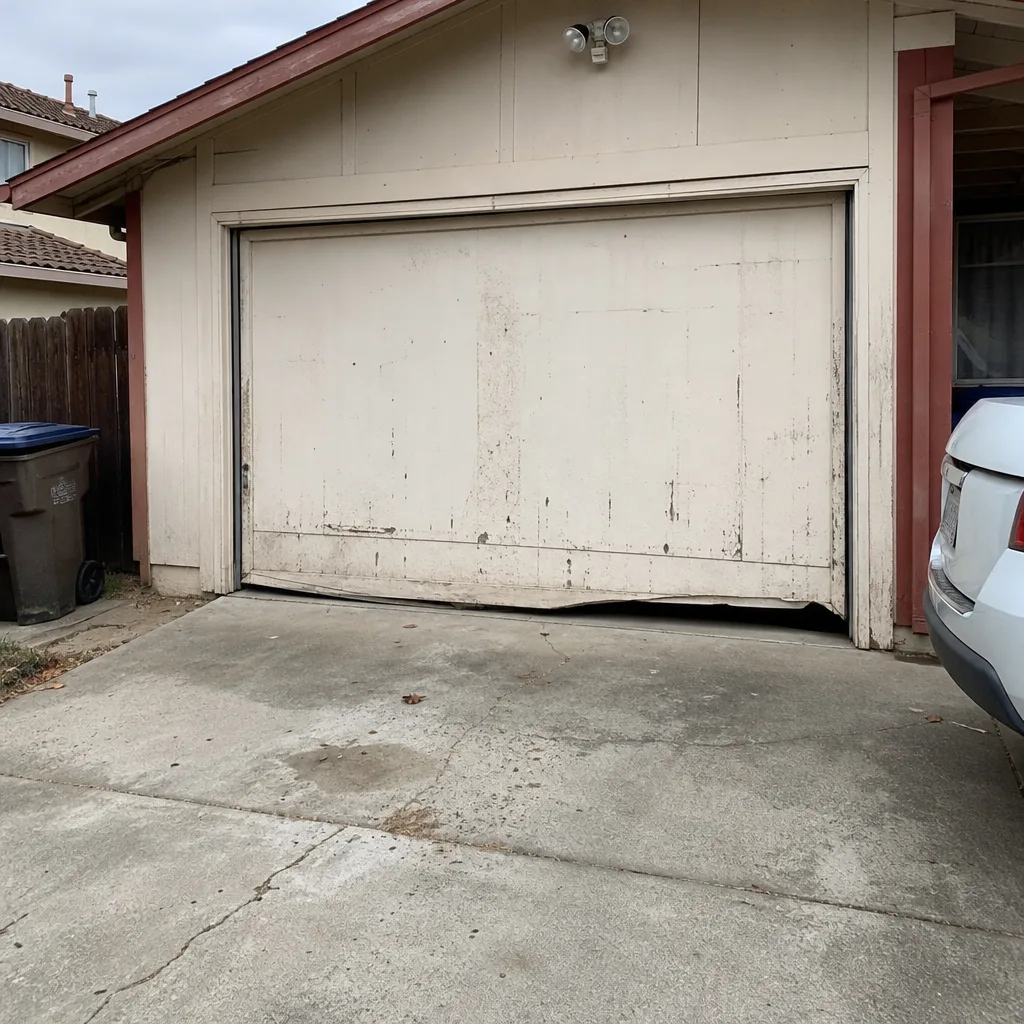 Before
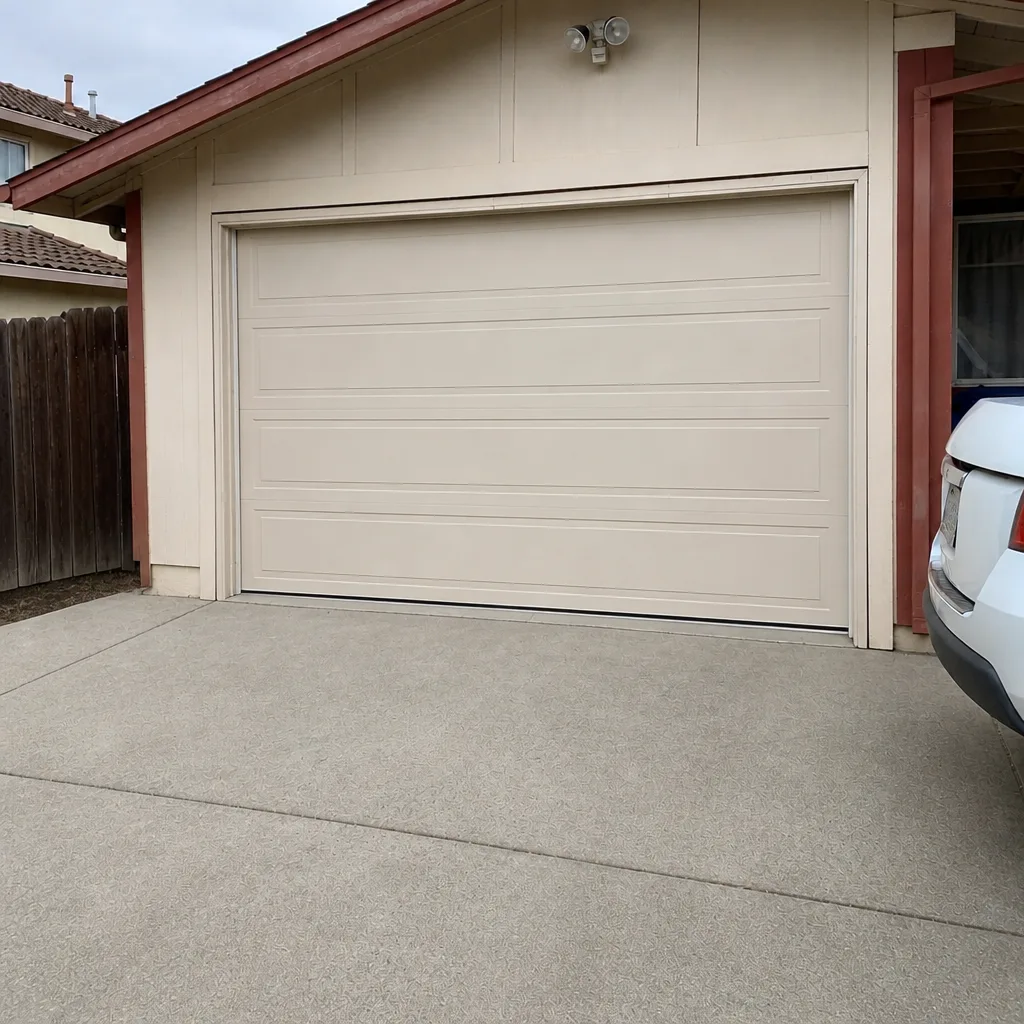 After
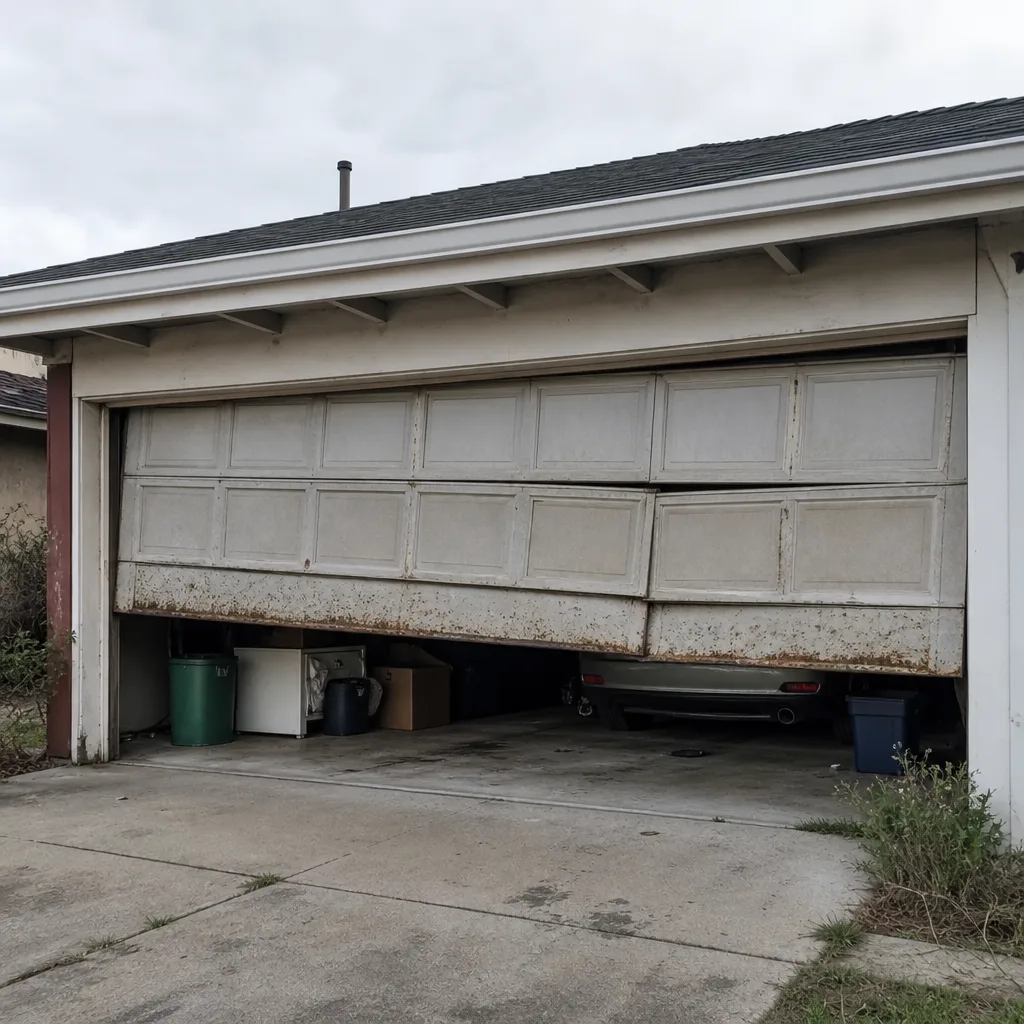 Before
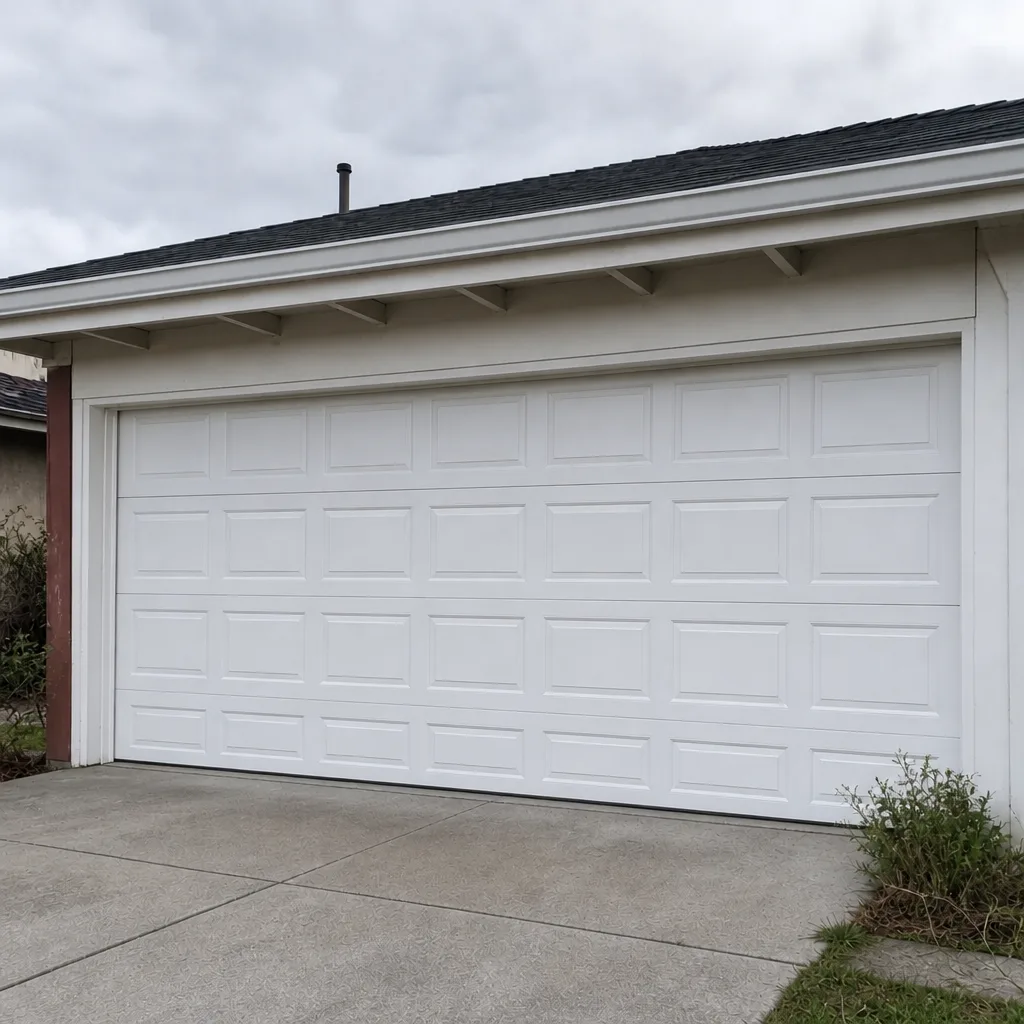 After
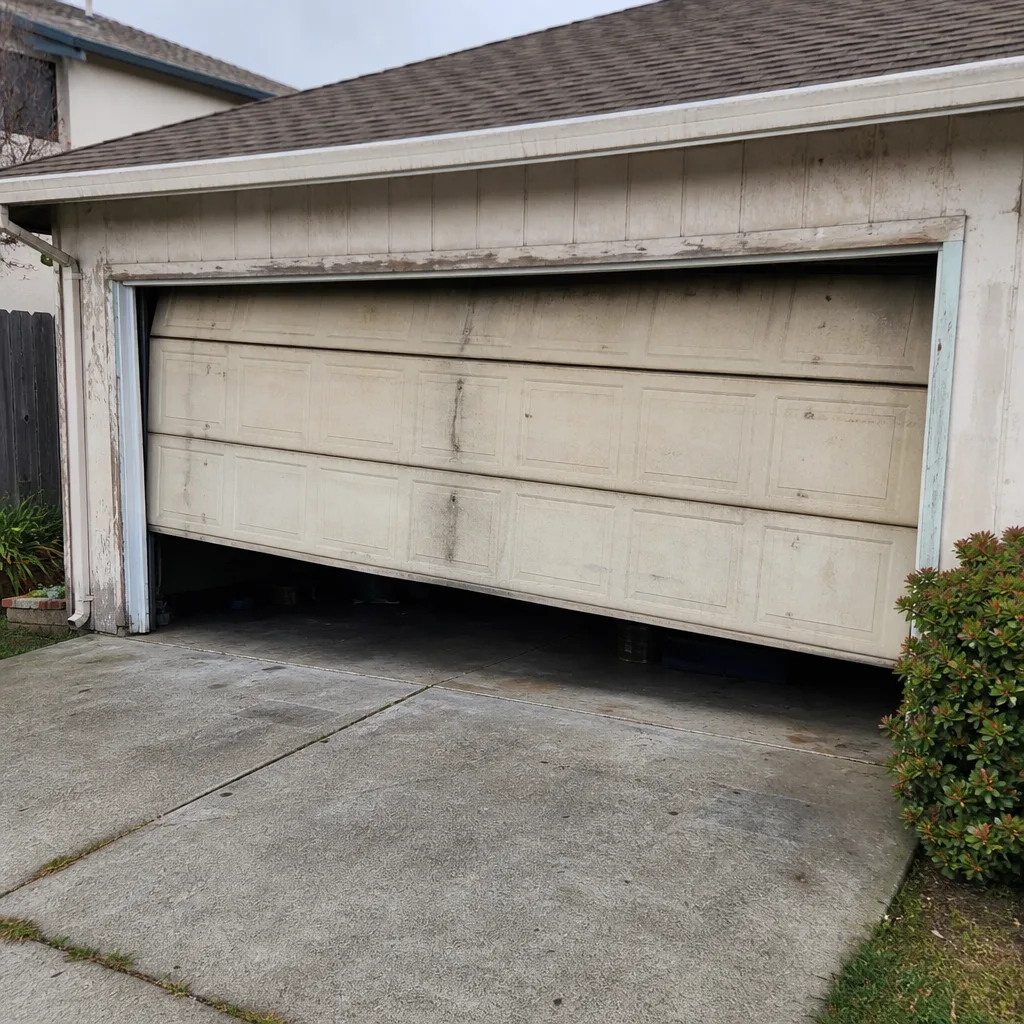 Before
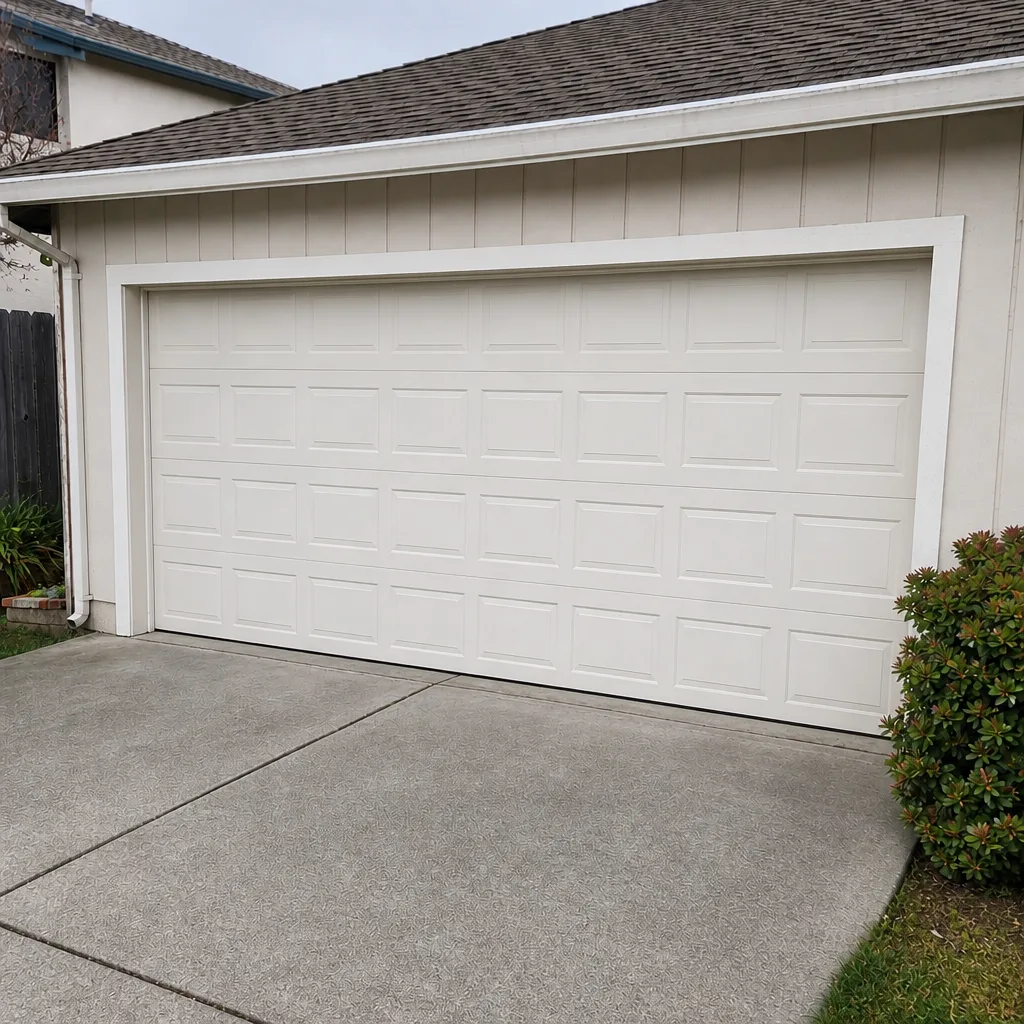 After
When to Call a Professional
Some things are a visual check and some things are a technician. Call a specialist for anything involving springs, cables, drums, or a door that has fallen. Call for any opener that’s failed more than twice in a month, for a door that reverses at the floor after you’ve cleaned and aligned the sensors, and for any binding that doesn’t clear after a socket-check on the track bolts. Call immediately if you hear the gunshot crack of a spring. Our technicians have up to 11 years of experience across LiftMaster, Chamberlain, Genie, Clopay, Amarr, Wayne Dalton, Craftsman, and Raynor systems. We answer 24/7, fast dispatch from 7am to 7pm, Sunday through Friday. Sawyer Garage Door Repair offers free estimates in Antioch – call (866) 944-5178.
Frequently Asked Questions
Most garage door repairs in Antioch fall between $90 and $420 depending on the part and the labor involved, with spring replacement typically running $180-$340 per spring and opener board replacement around $220-$420. Every estimate is free and written, and the price is quoted and agreed before any work starts, so the written estimate sets the final price. Call (866) 944-5178 for an exact quote.
Yes, in most cases. We answer 24/7, fast dispatch from 7am to 7pm, Sunday through Friday, and most doors we service are back in operation the same visit. Same-day service is standard for repair calls. Call (866) 944-5178 and we’ll get a technician scheduled.
No. The estimate is free, and we quote and agree the price before any work starts. If we find an additional issue during the work, we stop and talk to you about it before proceeding. You won’t get an invoice larger than the quote you agreed to.
Yes. Our technicians are licensed and insured, and our technicians have up to 11 years of experience. Every job is quoted before work starts, and we work with all eight major brands so your specific system is one we already know.
Spring fatigue is the most common, and it’s directly related to Antioch’s hot summers and the daily temperature swings driven by the Delta breeze. Metal springs cycling through that much expansion and contraction lose tension faster than in a cooler, narrower-range climate. If you hear the pop-before-break sound described above, call before the spring fails completely.
Almost certainly. We’re certified to work on LiftMaster, Chamberlain, Genie, Clopay, Amarr, Wayne Dalton, Craftsman, and Raynor – which covers most of what’s currently installed in Antioch homes. If your door or opener is from another manufacturer, call and let us know what you have; we can tell you right away whether we can help.
The Bottom Line
Garage door problems sort into three root causes – mechanical, electrical, and alignment – and getting the category right is the fastest way to know whether you’re facing a DIY check or a technician call. Mechanical spring and cable issues are the dangerous ones; alignment and sensor checks are the safe ones. Antioch’s specific climate adds spring fatigue and track expansion to the top of the list, so tune-ups in late spring and early fall are worth more here than in cooler climates. Listen to the door. The sounds come first. If anything sounds like a crack, a pop, or a thud, put the tools down and call a specialist. Garage doors are all we do, which is why the diagnosis is fast and the answer is accurate.
If you’re in Antioch and something on your door isn’t right, we can help. Whether it’s the door, the opener, or starting fresh with a new installation, one call covers it. Reach out to Sawyer Garage Door Repair at (866) 944-5178 for a free estimate. We answer 24/7. Fast dispatch from 7am to 7pm, Sunday through Friday.
If you’d like to learn more about our service area, you can read about Antioch and the surrounding East County communities we work with.
Written by the team at Sawyer Garage Door Repair.